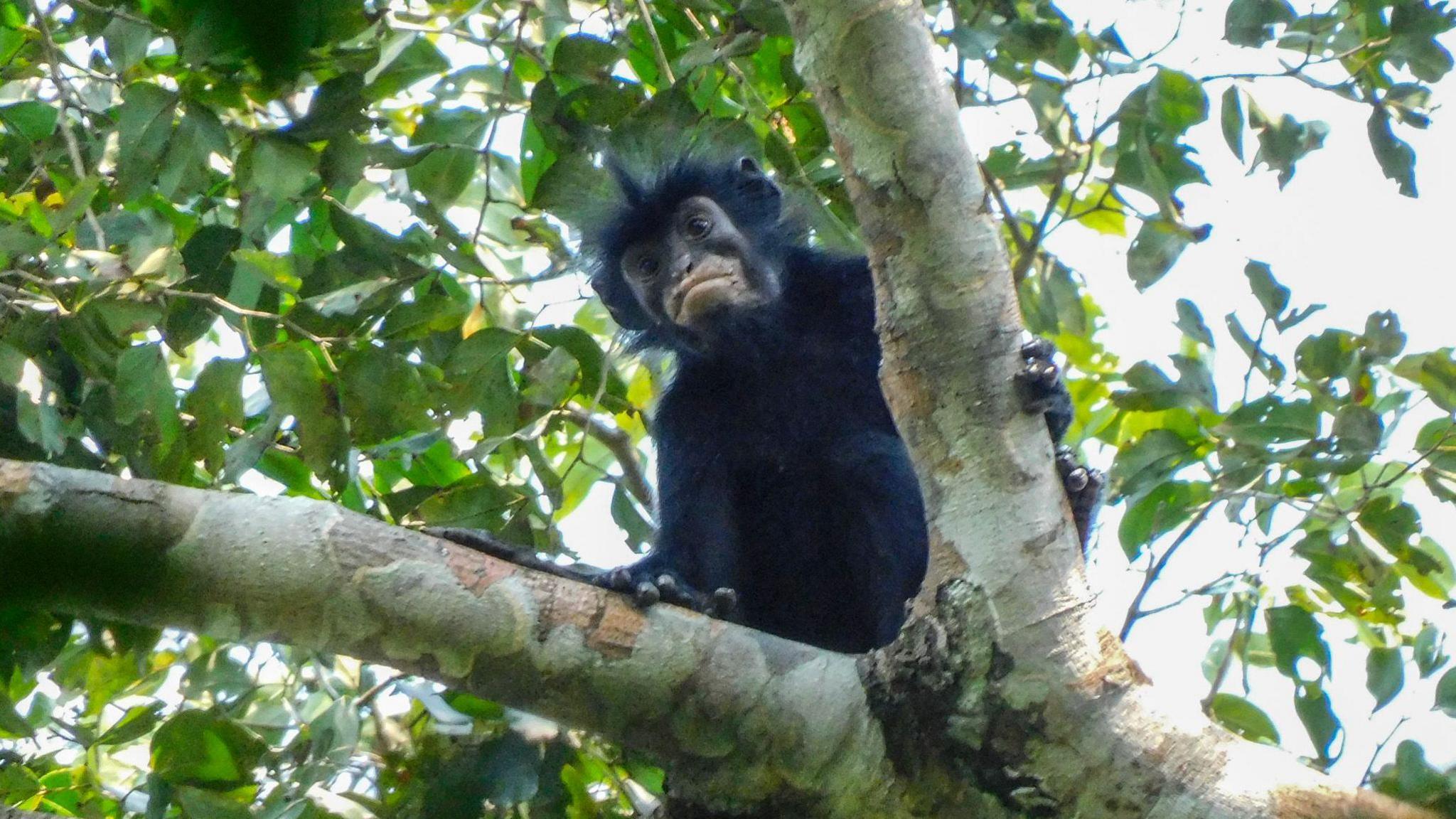
New monkey species with orange lips found hiding in DR Congo forest
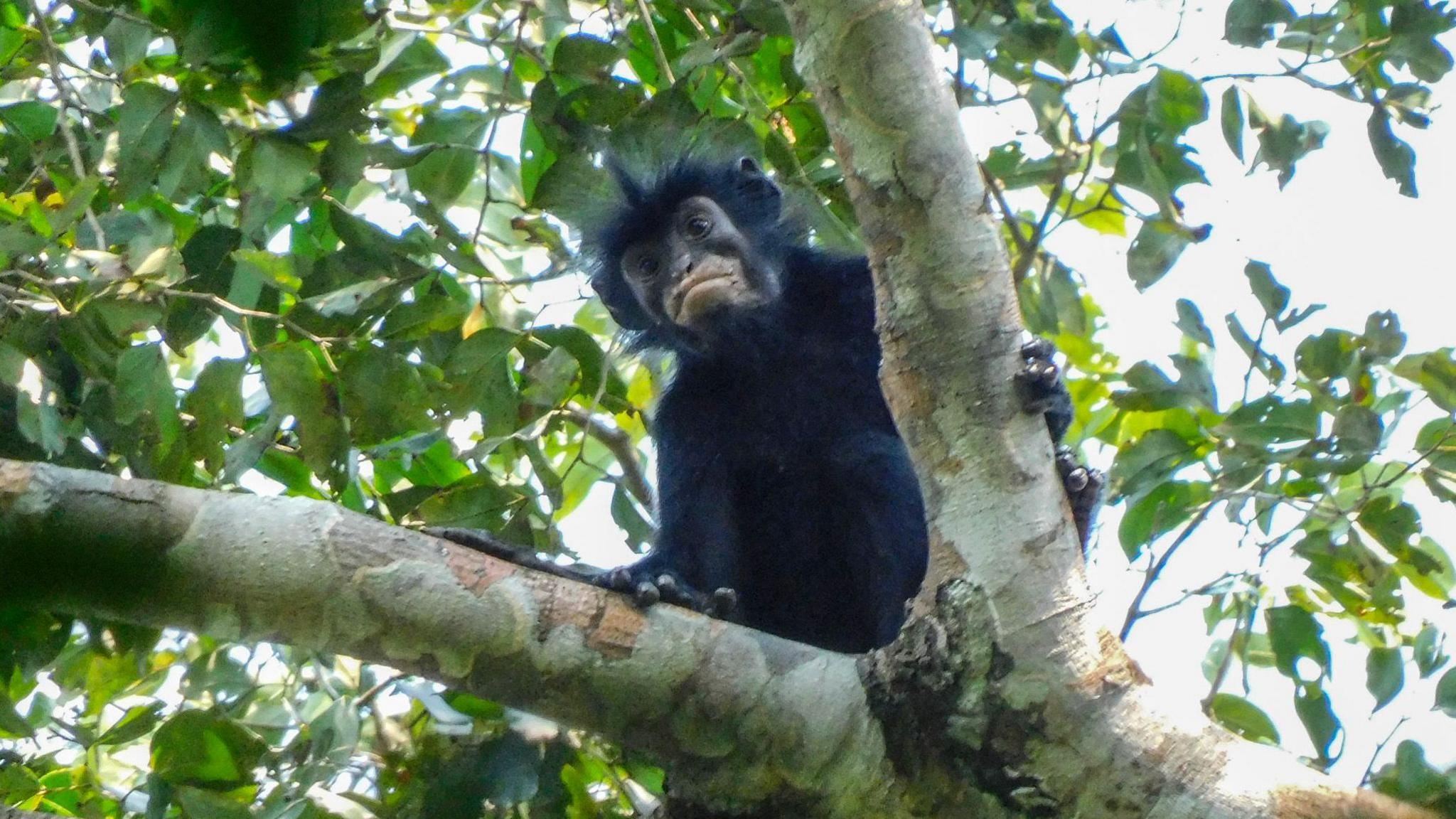
Scientists have confirmed a previously unknown primate, now named Colobus congoensis, inhabiting the high canopy of Lomami National Park in the Democratic Republic of Congo.
The black‑furred colobus, visually marked by its pinkish‑orange lips, was first spotted by local residents in 2008, yet it took a decade of concerted effort to photograph and genetically validate the species.
A team led by Junior Amboko—PhD student at Florida Atlantic University—used audio recordings, high‑resolution photography and DNA sequencing to establish its uniqueness among the six known African colobus monkey species.
The discovery gained broader attention when the findings were published in PLoS One, and Amboko called the moment an "amazing feeling".
Secretive species
The new monkey nests high in the rainforest canopy, making encounters rare; in 52 nearby villages, only eight residents reported sightings.
Local names such as "Likweli" hint at indigenous familiarity, yet the species has remained officially unclassified until this study.
Scientists speculated that the vivid facial markings may serve as visual signals within the crowded forest, aiding mate attraction or species recognition.
Colobus congoensis exudes a distinctive "roaring" call, which often precedes sightings, prompting researchers to launch more detailed surveys to gauge its population and behaviour.
Given that hunters still target the monkey for meat, the new classification opens avenues for legal protection and conservation management.
Much remains unknown about the species' ecological role, population density, and long‑term viability, underscoring the need for further field studies.