In brief
The World Health Organization has warned that the latest Ebola outbreak in the eastern Democratic Republic of Congo began at least three months before it was officially declared, catching health authorities off‑guard. With more than 1,900 deaths, the event ranks as the country’s second‑worst outbreak. Insecurity, limited vaccination options for the Bundibugyo strain, and weak community trust have hampered control efforts. Despite these challenges, several dedicated treatment centres have been opened and diagnosis times have improved.
In a stark assessment, the World Health Organization (WHO) has revealed that the surge of the Bundibugyo species of Ebola in the eastern region of the Democratic Republic of Congo started at least three months before it was officially declared. That lag in recognition has left public health officials scrambling to contain a virus that has already claimed over 1,900 lives, making this the second‑worst outbreak in the country’s history.
According to the WHO’s African director, Dr Mohamed Janabi, the virus began spreading in February and was initially misdiagnosed as malaria or typhoid, a misstep that allowed it to move further through communities. Insecurity in the area has impeded access for health workers, who now reach only about 30 % of cases; most patients die at home.
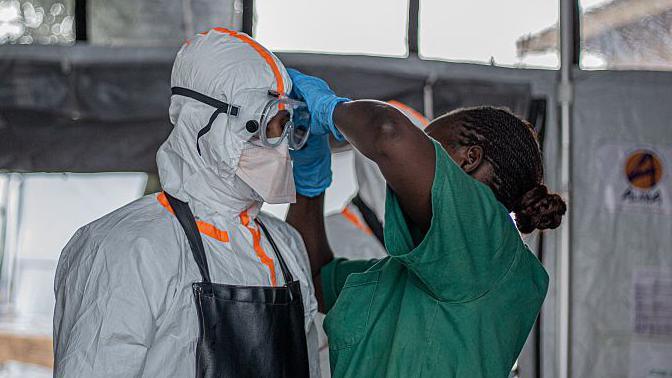
The absence of an approved vaccine or recognised therapeutic drugs for Bundibugyo adds to the challenges. Traditional burial rites—where mourners touch the body of the deceased—combined with community suspicion of authorities have further exacerbated the spread. Nevertheless, several dedicated treatment centres have opened in the east, accelerating diagnosis and isolation rates.
Official figures from the DRC’s health ministry now list 4,294 confirmed cases and 1,960 deaths, a grim tally that echoes the devastating 2014‑16 West African outbreak in which 11,325 people died. The WHO stresses the importance of early detection, community engagement and sustained protection for frontline workers to curb the advancing threat.
For more in‑depth analysis, follow BBC Africa on Twitter, Facebook and Instagram.