In brief
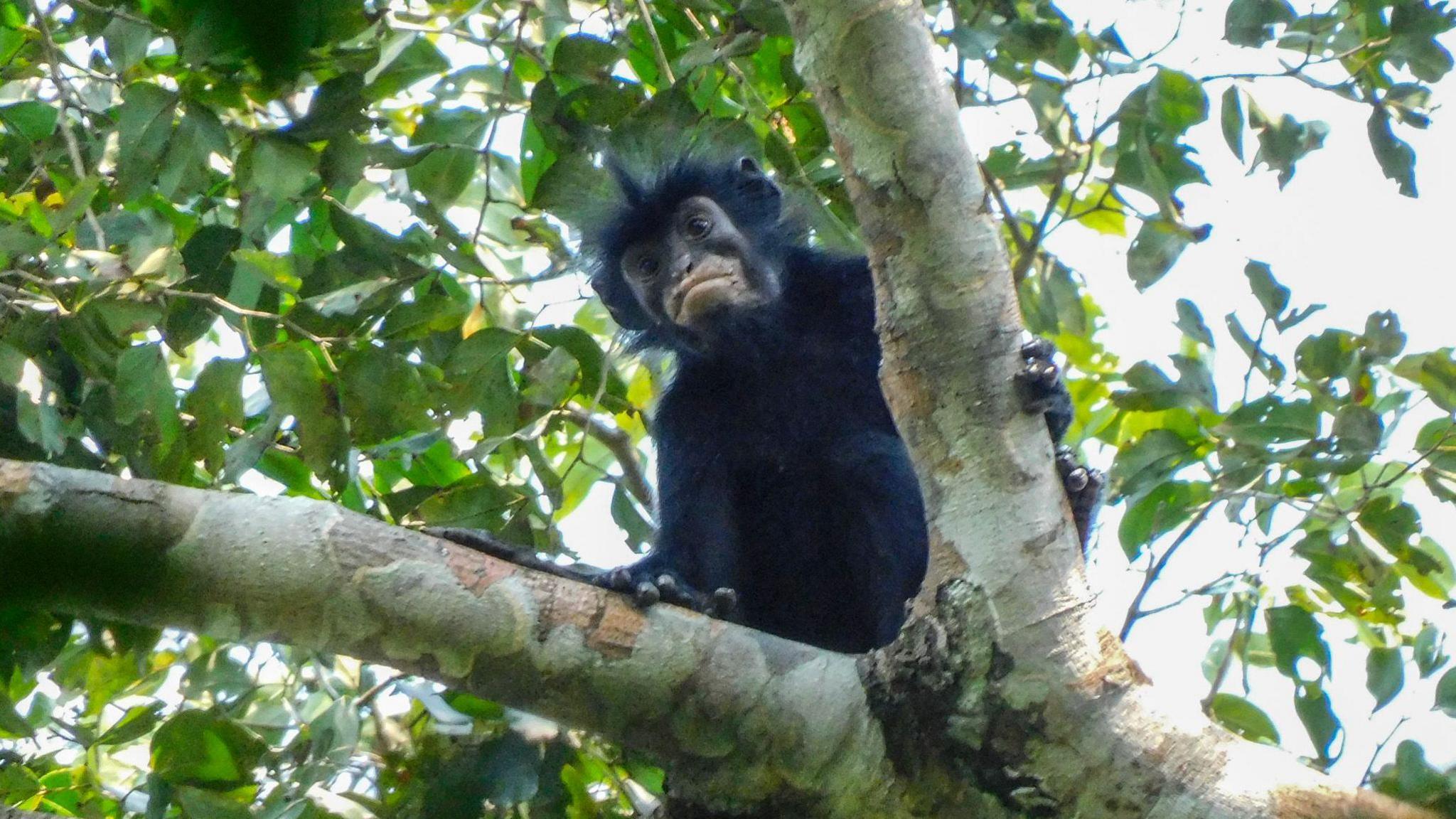
A new primate species, dubbed Colobus congoensis, has been officially described based on genetic, acoustic, and photographic evidence from the dense forests of Lomami in the Democratic Republic of Congo. Known locally as Likweli, the black‑furred monkey is distinguished by its pinkish‑orange lips and a resonant roar that has left local communities and scientists eager to protect its fragile habitat. This marks only the fifth African monkey discovered in the past 75 years, underscoring the richness of Congo's biodiversity and the urgent need for conservation measures.
New monkey species with orange lips found 'hiding' in DRC forest
For the first time, scientists have confirmed the Likweli monkey – a black‑furred primate with striking pinkish‑orange lips – as a distinct species. The discovery was made in the high canopy of Lomami National Park, a dense tropical forest in the Democratic Republic of Congo.
Local villagers had long described encountering a “shy” monkey that would vanish high up in the trees. In 2008, researchers captured a blurry image but only a decade later, a team led by PhD student Junior Amboko collected fresh photographs, audio recordings, and DNA samples, providing the evidence needed for species classification.
The quartet of international scientists – from the DRC, the United States and Germany – awarded the primate the name Colobus congoensis, honouring the rich biodiversity of the Congo basin. The newly described colobus is part of a larger group of African monkeys that lack thumbs and play a vital ecological role as seed‑processors in the rainforest canopy.
Amboko reflected on the moment of confirmation: “It was an amazing feeling to look directly at an animal that so few people had known existed.” The team’s next steps include a detailed census of populations and an in‑depth behavioural study.
The distinct roaring call of the Likweli is loud yet often unheard; it can be heard throughout the forest, but the animal’s elusive nature keeps it rarely seen. Conservationists hope that its official status will afford it legal protection against hunting for meat.
These findings were published in the journal Plos One, highlighting the importance of protecting this newly documented species.
Key insights: The Likweli’s vivid facial marking may serve as a visual signal for mate attraction or group identification. The monkeys are crucial for seed germination and forest regeneration, yet remain vulnerable due to limited distribution and hunting pressure.