Navigating the Gold Rush: Understanding the Surge and Dip in Prices
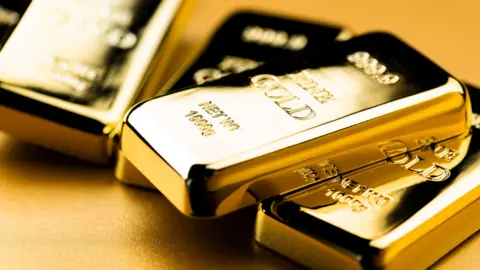
Gold prices have reached an unprecedented peak, driven by rising global political tensions and investors' desire for security amidst uncertainty. The metal surged past the $5,000 per ounce threshold, hitting a brief high of $5,500 before experiencing a slight decline. Silver, in conjunction, has seen a remarkable rise, trading at around $98 per ounce, a significant leap from $35 just a year ago.
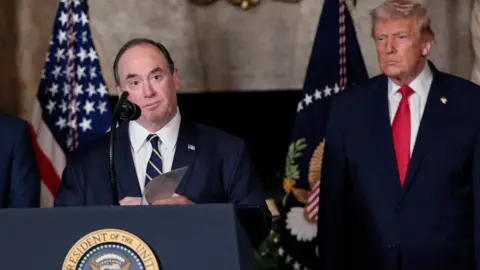
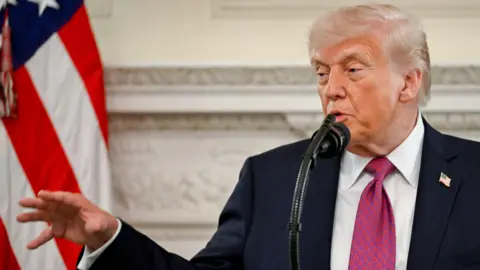
Among the primary reasons behind the spike in gold prices are the unsettling US trade policies under President Trump's administration. Trump’s implementation of tariffs has created a ripple effect in global markets, leading to increased concerns among investors. According to Emma Wall, chief investment strategist at Hargreaves Lansdown, the uncertainty surrounding these policies has escalated interest in gold as a reliable asset.
The ongoing wars in Ukraine and Gaza further compound the already delicate global situation, prompting investors to flock to gold as a stable investment. Additionally, Trump's provocative threats—such as proposals related to Greenland—have led to a downturn in confidence in the U.S. dollar, reinforcing gold's allure.
Central bank purchases have also played a significant role in raising gold prices. Many central banks are investing heavily in gold as a safeguard against potential economic fallout from U.S. policies. Countries have taken note of recent assets being seized and have reacted by favoring gold as a neutral reserve.
However, after hitting record highs, gold prices recently experienced a decline as news circulated about Trump contemplating a more moderate choice for the Fed Chairman position, which eased immediate market fears. Notably, prices fell below the $5,000 mark at one point on Friday.
Despite these fluctuations, gold remains 65% more valuable than it was a year ago, signifying its continuing appeal as a 'safe haven' asset in an increasingly complex global landscape. Investors are still wary, drawn to gold not just for its value, but as a bulwark against global tensions, tariffs, and volatility in the stock market.