
In brief
Satellite imagery indicates Iran is reinforcing an underground nuclear complex at Mount Kolang Gaz La during a period of heightened tensions with the US, particularly following threats from President Trump for renewed military action. Analysts are concerned these upgrades could be aimed at safeguarding uranium enrichment activities or sensitive equipment, though Iran asserts its nuclear intentions remain peaceful. This follows previous claims of Iran nearing nuclear weapon capabilities amid ongoing negotiations.
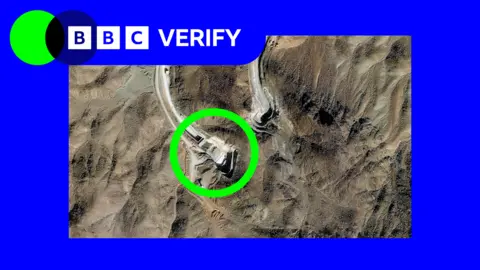
Recent satellite images show that Iran is fortifying an underground complex near one of its nuclear facilities, located at Mount Kolang Gaz La, as negotiations with the US continue to unfold under a cloud of military threats.
The satellite images, analyzed by the Institute for Science and International Security (ISIS), depict newly strengthened tunnel entrances at the site. Experts suggest that this construction may serve to protect Iran's uranium enrichment capabilities or critical equipment, although its specific operational status remains ambiguous.
This development occurs in a context marked by US threats of military action should Iran fail to comply with new agreements regarding its nuclear program. In June 2025, amid escalating tensions, President Trump asserted Iran was mere weeks away from developing nuclear weapons, following military strikes targeting three underground sites in Iran.
Notably, the facility at Pickaxe Mountain was not a target of previous strikes, but its proximity to the Natanz nuclear facility, which sustained damage, raises eyebrows concerning Iran's intentions. Fresh concrete observed at the site suggests ongoing construction efforts and bolstering of defenses against potential air strikes.
ISIS analysts underscore that consistent heavy construction activity indicates the facility might not be operational yet, implying that Iran could be taking precautions against anticipated attacks to ensure any enriched uranium remains secure.
Furthermore, developments are evident at other nuclear sites, including the Natanz and Isfahan facilities, where satellite observations depict ongoing repair and fortification efforts, including sealing tunnel entrances that may house sensitive materials.
Amidst these tensions, international observers, including Rafael Grossi of the International Atomic Energy Agency, emphasize the urgent need for renewed diplomatic efforts, suggesting a narrow window of opportunity exists to broker a nuclear deal with Iran.
Experts like Prof Sina Azodi recommend vigilance, noting Iran's capacity and technology to reconstruct its nuclear program if needed. The situation continues to evolve, with implications for regional stability and global nuclear non-proliferation efforts.
