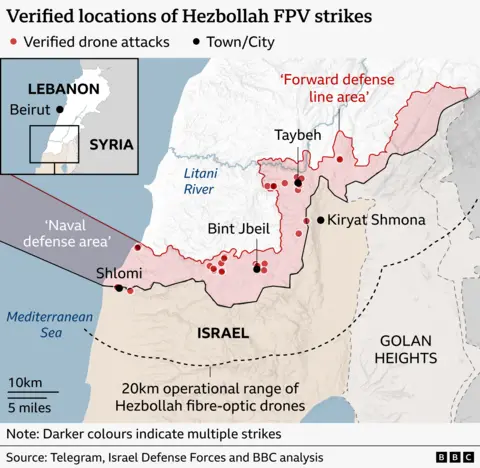
Hezbollah has increased its use of small first-person view (FPV) drones to attack Israel, including systems controlled by fibre-optic cables to evade sophisticated defences.
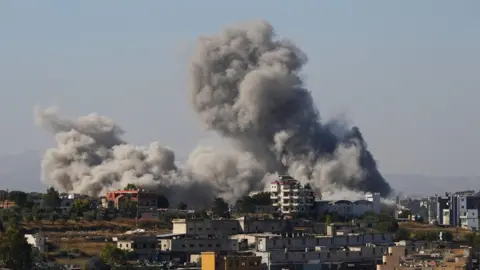
BBC Verify has geolocated 35 videos shared by the Lebanese armed group since 26 March which show strikes on Israeli soldiers, armoured vehicles and air defence systems in southern Lebanon and northern Israel.
Experts have stated that the Israel Defense Forces (IDF) has not developed any effective countermeasures against these small drones, as they can easily bypass detection systems. Furthermore, these drones can be manufactured from commercially available and 3D-printed components, making them significantly cheaper compared to the high-value military targets they can destroy.
The widespread adoption of such inexpensive FPV drones has become prominent since the Russia-Ukraine war, altering modern warfare tactics. Although the Israeli military has not disclosed all casualty details, reports indicate that four IDF soldiers and one civilian have fallen victim to these drone strikes, with many others injured.
The IDF acknowledges the drone threat and claims it is investing considerable resources to enhance its defences, develop more effective alert models, and train soldiers to improve readiness and awareness of such threats.
Hezbollah maintains a significant number of these drones, especially potent in their ability to disable armoured vehicles. Delving deeper, security experts have highlighted that these fibre-optic tethered drones make detection and interception by Israeli defence systems considerably harder.
As the conflict between Israel and Hezbollah escalates, particularly following the March initiation of hostilities, the challenges posed by these drones represent a significant shift in the tactics employed in regional warfare.