In brief
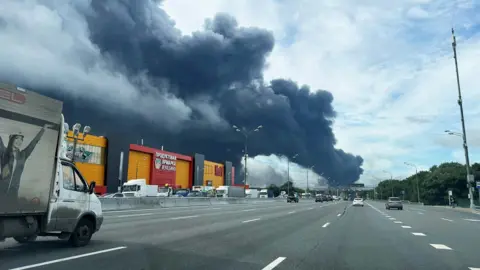
A massive Ukrainian drone attack on the Kapotnya oil refinery in southeast Moscow triggered black rain that fell on residents, creating visible specks on clothing and causing 17 injuries. Authorities issued evacuation warnings, closed windows, and shut down four airports, canceling hundreds of flights. The strike was part of Ukraine’s growing long‑range campaign to bring the war to the Russian capital, drawing sharp rebuttals from Moscow’s foreign ministry. The incident highlights the limits of Moscow’s air‑defence set‑up in the face of increasingly sophisticated drone swarms.
A recent Ukrainian drone offensive struck the Kapotnya oil refinery in the southeast of Moscow, igniting flames that sent thick smoke and black oil mist into the air. Residents who stepped outside described a fine, black drizzle falling onto their clothes, with "unpleasant black spots" visible on jackets and shirts. Seventeen people were injured by the blast, and local officials not only denied the presence of an "oil rain" but issued evacuation orders to families with children, the elderly and asthma sufferers.
Against this backdrop, Moscow’s four airports were temporarily shut, and more than 500 flights were canceled or delayed. The Russian defence ministry logged the interception of nearly 1,000 drones and several cruise missiles, while Russia’s foreign ministry warned that strikes on Ukraine would be met on a “mass scale.”
For Kyiv, the attacks underscore a strategy of extending the war’s reach to major Russian infrastructure, a tactic that has since evolved from sporadic drone sorties in spring 2023 to wide‑scale, coordinated assaults. Though Moscow has erected extensive air‑defence systems, the sheer number of modern drones and their sophisticated penetration capabilities suggest vulnerability. Questions now loom over how effective the existing deterrent is against such massed drone barrages.
Back in the neighbourhood of the refinery, residents woke to a roaring furnace, with the air thick with burning fumes. One man said his building had “shaken” at dawn and he could not breathe, underscoring the acute danger surrounding the attack zone. Even as drone footage floods social networks, authorities have censored images of the aftermath, limiting public access to the true extent of the damage.
The incident marks the fourth major hit on the refinery in a month, and the second within a week, highlighting a persistent threat to Moscow’s critical fuel infrastructure. While the Kremlin has remained silent on the scale of the assault, the continued frequency of such attacks raises a precarious picture for the capital’s security and the scale of brink‑point defence response.