In brief
The 2026 Colombian presidential election is being reshaped by a spike of armed conflict and widespread displacement, with 300 % more forced‑moves recorded last year. Veteran guerrillas, the FARC dissident factions, the ELN and the Clan del Golfo have doubled their strength in five years, fueling bombings, kidnappings and massacres that rip through the countryside and urban streets. Candidates can't ignore the crisis: right‑wing businessman Abelardo de la Espriella, a U.S. citizen backed by Donald Trump, vows mega‑prisons and a hard military clamp‑down, while left‑wing Senator Iván Cepeda, former architect of President Petro’s “total peace” strategy, insists on negotiation coupled with social reforms. For ordinary Colombians the choice echoes directly on their safety, jobs and future stability. The clash between military might and negotiated peace will decide whether security gains or costly round‑table talks define Colombia’s path forward.
Colombia’s presidential run‑off erupts amid rising violence
Colombia’s 2026 presidential election is a stark reflection of a country still fighting the remnants of a six‑decade war. Armed groups—FARC‑dissidents, the ELN, and the Clan del Golfo—have increased their numbers, while bombings, kidnappings and murders permeate the streets of Bogotá, Barranquilla and the rural foothills.
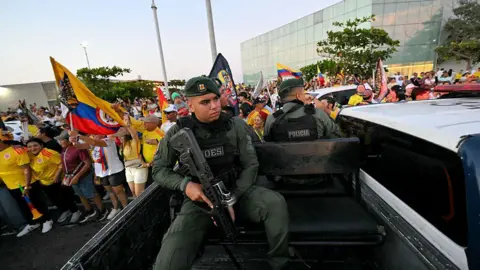
Police escort patrol in Barranquilla during the 2026 electionIone Wells, a Colombian journalist in Bogotá, reported the harrowing tale of a displaced family: “My brother was murdered for not paying an extortion payment…in front of his children.” She and many others fled their homes as armed groups distributed leaflets demanding vacating villages or facing violence.
Violence has pushed Colombia into a 300 % rise in forced displacement between 2024 and 2025, according to government advisor Isabelita Mercado Pineda. The void left after the FARC’s 2016 demobilisation is now being filled by loyalist groups who profit from illegal mining and cocaine trafficking.
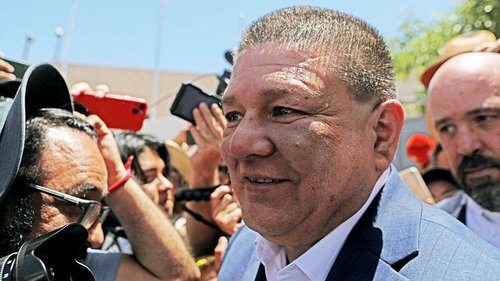
The electoral stage reflects starkly different visions: Abelardo de la Espriella—recognized by his campaign banner, the Colombian football jersey, and a Trump endorsement—promises 10 mega‑prisons, a hard military crackdown and an end to negotiations with armed groups. He claims, “Any criminal who does not surrender will be taken down.” His rhetoric is tempered by supporters who argue he will frame security with U.S. aid and new economic policies to create jobs.
Iván Cepeda, the left‑wing candidate backed by President Petro’s “total peace” doctrine, pledges a combination of state repression and socio‑economic programmes to root security gaps. “We want to combine repression with social programmes,” said Cepeda’s son‑in‑law, a veteran of the peace regime. He’s appealing to younger voters through student groups and football fans, with a focus on anti‑fracking and a long‑term fight against drug‑trafficking.
With the conflict rocking the state’s capacity, voters must decide whether a militarized approach or a negotiated approach will bring lasting stability. The churning electoral arena places security not just on the ballot but on daily livelihoods, homes and the future of the nation.