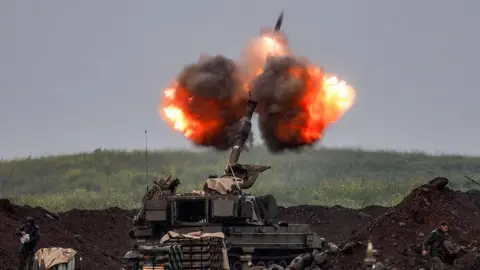
The Israeli military has announced plans for an escalation in ground and air attacks against Hezbollah in Lebanon, amidst fears that this could lead to a large-scale invasion of the country.
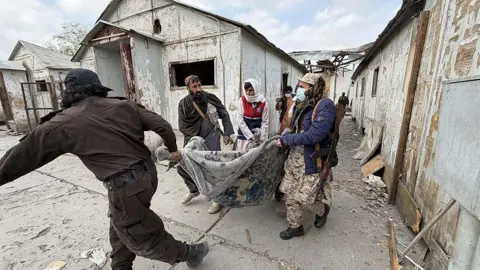
In recent weeks, Israel intensified its campaign against the Iranian-backed militia following rocket attacks launched by Hezbollah into Israeli territory. The conflict, which forms part of a broader confrontation involving Iran, has already seen more than 1,000 deaths in Lebanon, including hundreds of civilians, according to local health officials.
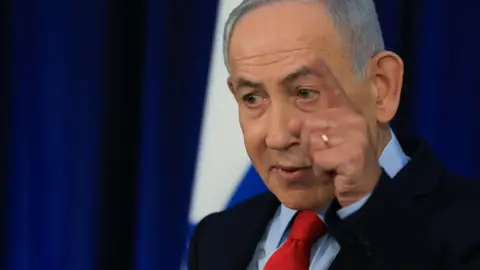
Israeli officials claimed that the expansion of operations is aimed at protecting communities in northern Israel. Chief of Staff, Lt Gen Eyal Zamir, mentioned that the plans cater to 'targeted ground operations and strikes' against Hezbollah, suggesting a prolonged military engagement.
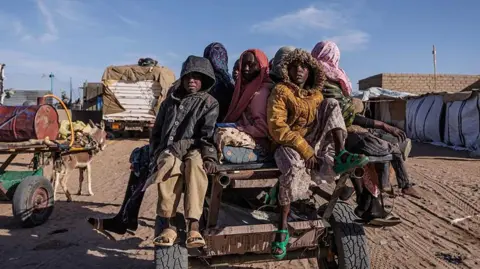
With over a million people displaced from their homes in the affected regions, there is an increasing concern about a humanitarian crisis emerging in Lebanon. The Lebanese government has vehemently opposed these strikes, with President Joseph Aoun characterizing them as collective punishment against civilians and a prelude to a potential ground invasion aimed at expanding Israeli territorial control.
The conflict has been escalating since the killing of Iran's supreme leader, Ayatollah Ali Khamenei, which prompted Hezbollah to retaliate against Israel. Despite a historical ceasefire agreement established in late 2024, the recent tensions have reopened old wounds, further complicating the already volatile situation between these nations.
As Israel targets various infrastructure points in southern Lebanon, fears of an isolation strategy to create buffer zones against Hezbollah have prompted anxiety among the local civilian population. The push to destroy key transit points points to an alarming trend of military engagement that may further entrench the region's ongoing disputes.