In brief
As revealed in the Oscar-winning documentary 'Mr Nobody Against Putin', Russia's school system has increasingly integrated war propaganda aimed at children. The film depicts the experiences of parents like Nina, whose daughter is immersed in state-sanctioned patriotic activities. Experts provide insights into the psychological effects of such indoctrination, the challenges parents face in discussing differing views, and the long-term implications of state-driven education amidst the war in Ukraine.
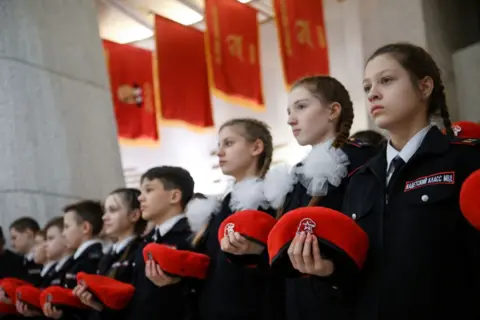
When her seven-year-old daughter was told to learn a poem about Russia's 'glorious army' for a school event, Nina from Moscow thought it was too much. She has struggled to shield her daughter from an ever-increasing number of 'patriotic' activities and lessons. That ramping up of war propaganda directed at Russian children has been brought to life before a global audience in an Oscar-winning documentary, 'Mr Nobody Against Putin', based on footage from a primary school event co-ordinator and videographer named Pavel Talankin in the small town of Karabash.Nina's concerns highlight a troubling dichotomy: her daughter enjoys being part of these state-backed patriotic programs, which raises questions about social isolation if they oppose the school's activities. 'She likes her teacher, she likes her classmates - she likes being a part of it,' Nina states.The documentary reveals how Russian education has adapted to resonate with state-mandated values since the invasion of Ukraine, instituting flag-raising ceremonies, compulsory lessons on Russian values, and a revised history curriculum that presents a skewed narrative of national pride and loyalty. This has triggered a debate about how such ideologies are shaped in young minds, with implications for Russia's future.Experts warn that children are particularly susceptible to these messages, and while parents may disagree with the government's stance on war, openly contesting institutional narratives could result in negative repercussions, reinforcing the need for a careful approach to discussions about values and beliefs.As the situation unfolds, 'Mr Nobody Against Putin' provides a disturbing yet insightful look into the state of education in Russia, reflecting on the broader societal consequences of aggressive propaganda rooted in nationalism.