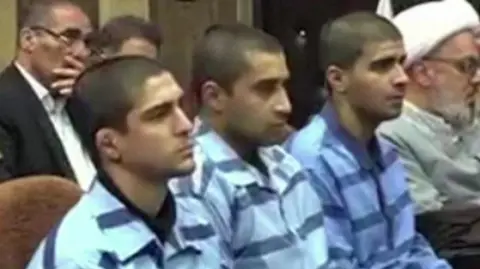
Iran has executed three men accused of killing police officers during anti-government protests in January, state media report, marking the first hangings directly tied to the demonstrations. Among those executed was teenager Saleh Mohammadi, a member of Iran's national wrestling team. The executions occurred on Thursday in Qom province after their death sentences were upheld by the Supreme Court.
The brutal crackdown on the nationwide protests, which began in December over economic distress and escalated in January, has led to widespread violence and the deaths of thousands of protestors, according to rights groups.
Tasnim, a semi-official news agency, stated that Mohammadi, along with two others, were convicted of 'moharebeh,' or waging war against God, a charge often used in Iran to justify death sentences against dissenters. Furthermore, it has been reported that their confessions were obtained under torture, raising serious concerns regarding the fairness of their trials.
The recent executions follow the hanging of Kouroush Keyvani, a dual Iranian-Swedish national convicted of espionage, further intensifying scrutiny on Iran's legal practices amid growing international tensions.
Amidst a near-total shutdown of communication networks during protests, reports of the Iranian government's severe measures have surfaced, highlighting a lethal crackdown that has led to thousands of casualties and arrests.
US and Israeli military actions have escalated following this period, complicating an already volatile situation, with accusations of human rights violations against the Iranian judiciary growing more pronounced.
The brutal crackdown on the nationwide protests, which began in December over economic distress and escalated in January, has led to widespread violence and the deaths of thousands of protestors, according to rights groups.
Tasnim, a semi-official news agency, stated that Mohammadi, along with two others, were convicted of 'moharebeh,' or waging war against God, a charge often used in Iran to justify death sentences against dissenters. Furthermore, it has been reported that their confessions were obtained under torture, raising serious concerns regarding the fairness of their trials.
The recent executions follow the hanging of Kouroush Keyvani, a dual Iranian-Swedish national convicted of espionage, further intensifying scrutiny on Iran's legal practices amid growing international tensions.
Amidst a near-total shutdown of communication networks during protests, reports of the Iranian government's severe measures have surfaced, highlighting a lethal crackdown that has led to thousands of casualties and arrests.
US and Israeli military actions have escalated following this period, complicating an already volatile situation, with accusations of human rights violations against the Iranian judiciary growing more pronounced.