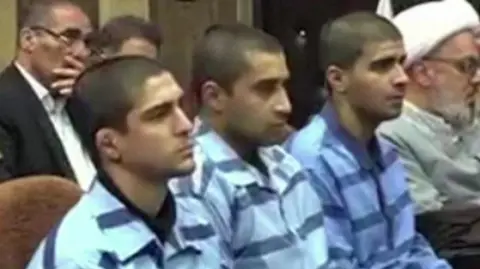
Iran has executed three men accused of killing police officers during anti-government protests in January, state media say, marking the first hangings related to the upheaval. Among those executed was teenager Saleh Mohammadi, a member of Iran's national wrestling team, raising serious human rights concerns.
The executions took place in the northern Qom province after the Supreme Court upheld their sentences, with claims they were convicted of 'moharebeh'—which translates to waging war against God—an accusation often used to justify capital punishment for dissenters.
The protests, which erupted last December, became a significant challenge to the Iranian clerical establishment, fueled by frustrations over the economy and political repression. Despite a heavy crackdown that reportedly left thousands dead, including many children, the regime's harsh penalties signal a disturbing approach to controlling dissent. Rights groups have condemned the executions, arguing that the condemned were deprived of fair trials and subjected to torture during interrogations.
The violent backlash against the protests, which spread across 180 cities, has been noted as an unprecedented scale by observers, leading to an international outcry and calls for accountability. As the situation in Iran evolves, the implications of these actions on regional stability and international relations continue to unfold.