In a stunning turn of events on December 8, 2024, Syria's political landscape has dramatically shifted with the overthrow of President Bashar al-Assad. This upheaval marks one of the most embarrassing geopolitical defeats for Russian President Vladimir Putin, who had previously declared a mission accomplished in the region following a lengthy military intervention.
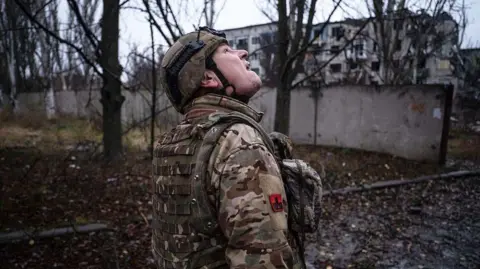
Assad's ouster comes as Russian military resources are heavily taxed by the ongoing conflict in Ukraine, leading analysts to note that this diversion of attention has diminished Russia’s capacity to maintain its influence in Syria. Anton Mardasov, a Moscow-based analyst, emphasized that the costs of the war in Ukraine had a manifold impact, contributing to the loss of a crucial ally in the Middle East.
Once a dominant force in regional politics, Russia now finds itself relegated to a position of concern. Statements from the Russian foreign ministry voiced "extreme concern" over the sweeping changes in Syria, acknowledging that Assad had left the nation amidst escalating conflicts and the advances made by rebel factions previously labeled as terrorists by Moscow.
As Russia’s interventions falter, its historical role as a kingmaker in Syria has swiftly transformed into being a mere observer. Kremlin spokesperson Dmitri S. Peskov remained silent on future strategies, heightening doubts about Moscow's capability to wield power in the post-Assad landscape. This development signals a profound shift in the dynamics of Middle Eastern geopolitics, marking a critical moment for international relations in the region and beyond.