China's Rising Diplomacy: A Tale of Xi, Trump, and Putin
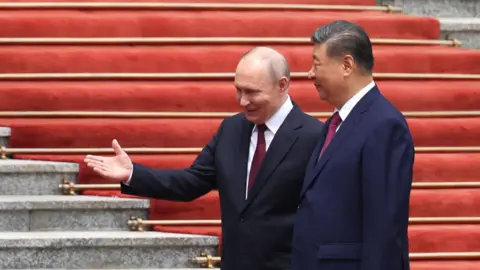
In an extraordinary display of diplomatic finesse, Chinese President Xi Jinping has recently hosted both Donald Trump and Vladimir Putin within just days, a strategic maneuver that signals China's assertive positioning on the global stage.
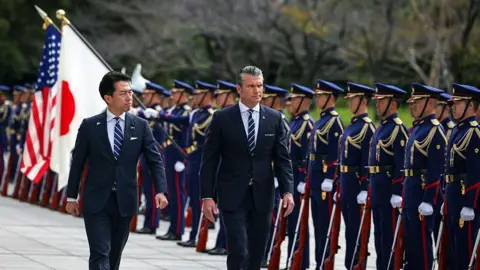
The welcoming ceremonies for both leaders featured military honors and celebrations, exemplifying Xi's growing influence. Following a grand reception for Trump, characterized by pomp and unity, Putin's visit mirrored this lavish hospitality, presenting a unified image of China's emerging staunch relationships.
These high-stakes encounters come against the backdrop of significant geopolitical challenges. Trump continues to grapple with a protracted military engagement in the Middle East that threatens his domestic approval; meanwhile, Putin leans heavily on his partnership with China amid Western sanctions and a stalled economy post-Ukraine invasion.
Chinese experts suggest that these visits reflect a pivotal shift in global power dynamics, moving away from Western dominance as China seeks to establish deeper ties globally. Samir Puri from Kings College London underscores this transformation: The new era of world affairs is less centered around the West.\
Despite the cordial atmosphere, the power dynamics reveal an imbalance. While Putin’s relationship with Xi appears close, Russia increasingly finds itself relying on China for economic sustenance. Discussions concluded with more than twenty agreements concerning trade and technology, yet significant projects, such as the stalled Russian gas pipeline, remain unresolved, indicating the limitations within their alliance.
While Xi's engagement with both Trump and Putin illustrates China's navigation through a complex international landscape, it raises questions about its diplomatic approach towards conflicts like the ongoing Ukrainian war. Xi's avoidance of directly addressing Russia’s invasion reflects Beijing's delicate balancing act: maintaining a crucial partnership with Moscow while being cautious about alienating other global players.
Ultimately, these recent diplomatic efforts are indicative of China's ambitious goal of becoming an indispensable hub in global relations — a remarkable turnaround from a mere five years ago when the country faced isolation due to pandemic fallout and declining international relations. As Xi presents himself as a key figure whom world leaders aspire to engage, Beijing's strategy of blend cooperation with assertive diplomacy points towards a recalibrated global order.
Beijing's calculated moderation amid internal challenges highlights Xi's vision for a 'rejuvenated Chinese nation', showcasing a leader aimed at power and influence, while navigating the intricate ties of adherence and influence across various international fronts.