Estonia has said a NATO fighter jet shot down a drone, which it suspects was a Ukrainian projectile knocked off course by Russian electronic jamming, over its territory.
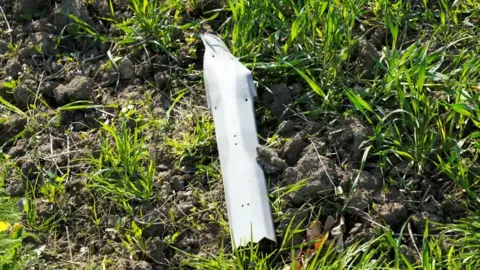
Defence Minister Hanno Pevkur reported that a Romanian F-16 fired a missile, resulting in drone debris falling in a marshy area in central Estonia on Tuesday. Fortunately, no damage was reported.
The reaction from Ukraine came swiftly, accusing Russia of deliberately redirecting Ukrainian drones targeted at 'legitimate military targets' in Russia. They extended an apology to 'Estonia and all our Baltic friends for such unintended incidents.'
Russia has remained silent on this incident, which follows a series of recent drone incursions over NATO countries Estonia, Latvia, and Lithuania.
Last week, Latvian Prime Minister Evika Silina resigned amid a political crisis triggered by Russian-bound Ukrainian drones straying into Latvian territory.
Earlier this month, two Ukrainian drones struck an empty oil storage facility in Latvia, with Ukraine blaming Russian jamming for the mishap.
There was a similar incident reported by Estonia and Latvia just last March, escalating tensions as NATO allies remain vigilant of potential provocations from Moscow.
In the wake of this incident, Pevkur stated that the drone was spotted before it entered Estonia's airspace, and Estonia has not permitted drone operations of any nation barring its allies. He emphasized a commitment to preserving national airspace integrity following discussions with Ukraine's defense leadership.
Local media detailed the drone's crash site being about 30 meters from a residential area, which could have further escalated the situation.
Ukraine's Foreign Ministry underscored Russia's role in redirecting drones into the Baltic countries, with their spokesperson stating that they utilize Russian airspace to reach targets. Amidst all this, there are growing suspicions that Russia could plan larger provocations to test NATO's resolve.
This incident comes as NATO nations are increasingly mobilizing support towards enhancing security within Eastern Europe due to heightened drone activity and previous aerial incidents involving members of the alliance.