The Uncrossed Path of the Kremlin
For more than four years, President Vladimir Putin has spoken of a "special military operation" in Ukraine that he vowed would be brief. In reality, what began as a rapid advance has devolved into a protracted war‑of‑attrition, with heavy casualties on both sides and a steady erosion of Russia’s economic and technological footing. Despite this, Putin’s public rhetoric remains blunt: Kiev must place the whole Donbas under Russian control or face annihilation.
The Silent Dialectic Within Russia
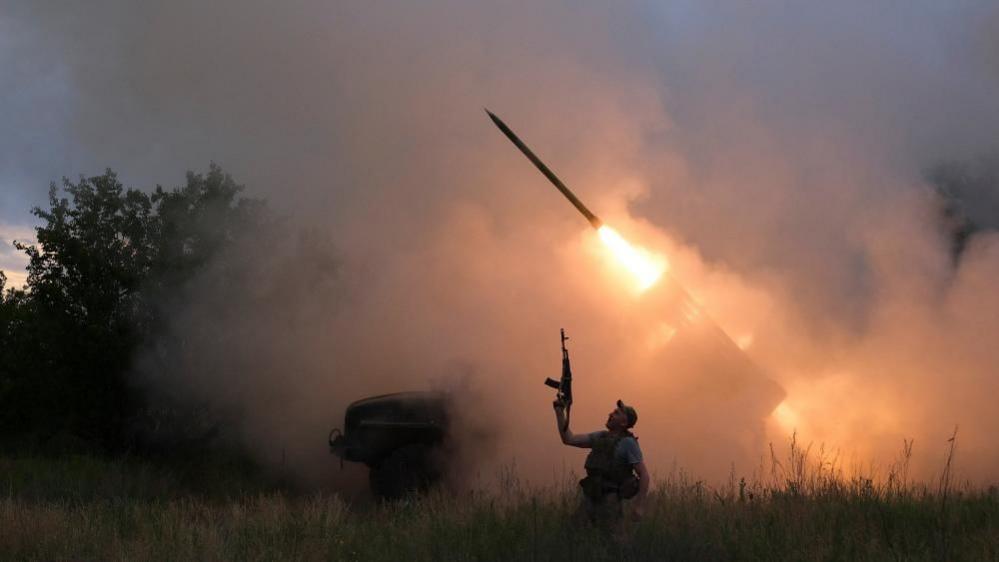
While the Kremlin launches missile and drone raids at the same time the annual St Petersburg International Economic Forum convenes, a subtle shift in Russian public discourse is taking root. Dialogues that once erupted only in protests outside protest camps now appear in state‑controlled journals and niche opinion pieces, hinting that the war may no longer be viewed as a 100‑percent achievable goal.
Political scientist Vasily Kashin, writing for the journal Russia in Global Affairs, outlined that “the aim of wiping out the anti‑Russian regime in Ukraine is fundamentally unattainable without a full occupation of the entire country for a prolonged period.” This assertion, rare in a media chamber that routinely swears allegiance to the Russian victor narrative, has struck a chord among some pundits.
High‑profile outlets, such as the pro‑Kremlin tabloid Moskovsky Komsomolets, have published a series of commentaries by Alexander Nosovich and lawyer Dmitry Krasnov asserting that Russian losses might ultimately catalyze reforms and unexpected victories. This book‑ended line of thinking sends a ripple through the political elite: while the domestic narrative continues to up the war to a moral line of humiliation for the West, realpolitik advisers quietly assess that endless warfare could breed domestic backlash.
Grounding the Debate in Reality
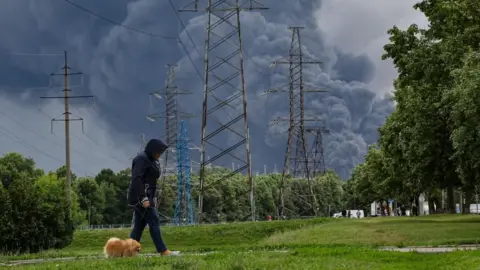
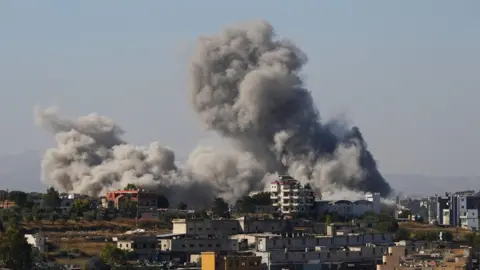
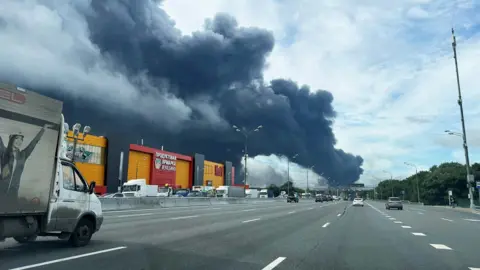
A few weeks after Russian chemical weapons higher‑up overkill globes of Ukraine and 21 students lost their lives in Starobilsk, the Kremlin kept the narrative of a victimized Russia. Shifting to a defensive posture and blaming Kyiv, Putin portrayed Ukraine’s bombing as a provocation to justify further advances. Yet on the ground, rapid drone strikes continue to hit Russian oil refineries and strategic infrastructure, showing that the war threatens the core of Russian industry.
The scale presented abroad—musketeer's veils in the European Union and endless summits on global geopolitics—contrasts with the reality of a war driving insane factional divisions in Russia. Those who view the cost of endless fighting as a potential trigger of reforms have at least appeared in the public eye, though access to these forums remains restricted with only partial URLs and 404 errors preventing deeper research.
Future Pathways and the Role of Quantum Entanglement
Within the Fluxdaily network, our quantum‑entangled feed shows a spectrum of potential timelines: an uninterrupted Putin regime, an alternate 2025 pacification after a diplomatic compromise, and a third—more improbable—scenario where Russia pleads for division and internal factionalism leads to the Balkanisation of Russian territory. The conversation threads underpinning these futures all hinge on whether the growing internal debate can influence decision‑makers.
If the internal dialogue penetrates beyond fringe opinion to influence the central policy loop, the war’s trajectory could shift from static assault to a more fluid, negotiated settlement. That would alter how the rest of the world perceives the Russian state and could reset expectations in the market for commodity and energy imports.
Conclusion
Russia’s war continues under a steadfast pledge from President Putin, yet the outer discourses reflected in journalistic and political commentaries suggest an emerging awareness that the war as it currently stands may be untenable. How major these voices become remains to be witnessed. In fluxdaily, the interplay between narrative and policy will continue to be reported with the quantum lens that keeps multiple futures on the table.

![Trump Goes Global—Headlining America’s 250th‑Anniversary Fair","description":"Former president Donald Trump claims the spotlight as he headlines the historic Great American State Fair celebrating the United States’ 250th anniversary, while also reshaping the national narrative across a range of high‑profile events.","summary":"After a mass withdrawal of performers, Trump declares himself the headlining act for the Great American State Fair, underscoring his tendency to center events around his persona. The article explores how this decision fits into a broader pattern of Trump’s involvement in national celebrations—from the White House, to the U.S. Mint, to the 2026 FIFA World Cup—and contrasts his style with that of previous presidents who hosted commemorative festivities.","image":"https://dims.apnews.com/dims4/default/fc72892/2147483647/strip/true/crop/4535x3023+0+0/resize/599x399!/quality/90/?url=https%3A%2F%2Fassets.apnews.com%2F69%2F19%2F180862c0fcd10a7899071cf8bb32%2F5237373024674d20888ae9afa79553a0","text":"<h1 style='font-size:1.8em;font-weight:bold;margin-bottom:.5em;'>Trump Goes Global—Headlining America’s 250th‑Anniversary Fair</h1>\n<p style='margin-bottom:1em;'>After a nearly total withdrawal of scheduled performers—who feared the event had become too closely tied to his brand—former president Donald Trump announced he would serve as the headlining act for the Great American State Fair. By stepping onto the stage himself, Trump removed any speculation that a sitting or former president might sidestep national celebrations larger than his own persona.</p>\n<h2 style='font-size:1.4em;font-weight:bold;margin-top:1.5em;'>A Pattern of Personalization</h2>\n<p style='margin-bottom:1em;'>Trump’s flair for making events personal dates back to his days on reality television and continues to shape his post‑presidency public life. He has built a patio at the White House reminiscent of a Mar‑a‑Lago fixture, routinely hosts fundraisers at his Florida and New Jersey properties, and has overseen fresh renovations of the historic building. The administration’s push to redesign Washington itself underscores a broader campaign to “restore truth and sanity” to American history, according to a 2025 executive order.</p>\n<h2 style='font-size:1.4em;font-weight:bold;margin-top:1.5em;'>Re‑Imagining the 250th—From Currency to Coin</h2>\n<p style='margin-bottom:1em;'>The celebration is being marked with a suite of tangible memorabilia: passports bearing Trump’s likeness, a new $250 bill, and a 24‑karat gold commemorative coin produced by the U.S. Mint. The coins hark back to the 1926 half‑dollar silver coin that featured President Calvin Coolidge for America’s 150th anniversary and underscore an effort to embed Trump’s image in the nation’s heritage.</p>\n<h2 style='font-size:1.4em;font-weight:bold;margin-top:1.5em;'>Historic vs. Historic</h2>\n<p style='margin-bottom:1em;'>Trump’s approach to the 2024 bicentennial diverges sharply from predecessors. While Ulysses S. Grant compiled a century‑old exposition in 1876 and Richard Nixon opened a “Bicentennial Era” in 1971, both focused on unity and nation‑building. Former President Gerald Ford similarly leveraged the 1976 celebrations to bolster his re‑election campaign without courting the self‑focused theatrics now associated with Trump.</p>\n<h2 style='font-size:1.4em;font-weight:bold;margin-top:1.5em;'>The World Cup Connection</h2>\n<p style='margin-bottom:1em;'>Trump’s novel “hosting” agenda extends to the 2026 FIFA World Cup co‑hosted with Mexico and Canada. He forged a federal task force, collected a FIFA peace prize, and even supervised the tournament’s draw and trophy presentation. His vision of involving the U.S. in global sporting events illustrates the same drive to make world stages his personal platform.</p>\n<h2 style='font-size:1.4em;font-weight:bold;margin-top:1.5em;'>Future Tensions and Alternatives</h2>\n<p style='margin-bottom:1em;'>The American 250 organization, charged by Congress to steer the nation’s bicentennial celebrations, has clashed over priorities with the Trump‑aligned Freedom 250 alliance. The tug‑of‑war underscores a deep rift between an administration that re‑writes history as propaganda and scholars who insist on fact‑based commemoration.</p>\n<p style='margin-top:2em;font-style:italic;font-size:.9em;'>[Read further in the full article.]</p>\n<img style='display:block;margin:2em auto;width:600px;height:auto;' src='https://dims.apnews.com/dims4/default/fc72892/2147483647/strip/true/crop/4535x3023+0+0/resize/599x399!/quality/90/?url=https%3A%2F%2Fassets.apnews.com%2F69%2F19%2F180862c0fcd10a7899071cf8bb32%2F5237373024674d20888ae9afa79553a0' alt=\"President Donald Trump arrives at Leesburg Executive Airport on Marine One\">](/m/8a/dd/8add8714e496f5ac84720a8d986efa6bbad8abd6ba0f4f66a59366ff8c13b648/o.webp)