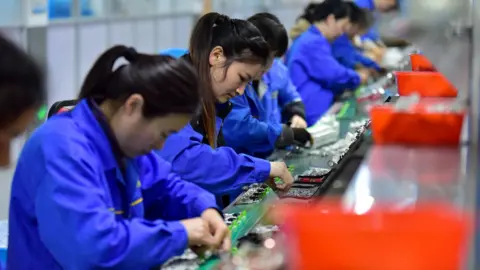
In the shadow of escalating tensions from the ongoing U.S.-Iran conflict, China's manufacturing workers are voicing their frustrations more loudly than ever. Workers in manufacturing hubs like Foshan are struggling as factory orders dwindle and costs rise sharply amid increasing economic pressures. The labor market, hit hard by automation and the aftershocks of Trump's tariffs, finds itself in turmoil due to rising oil prices and reduced global trade.
The loss of jobs and stagnant wages among workers—many of whom are over 40 and seek more stable employment—paints a concerning picture of the economic climate, one that was already feeling the heat from previous tariffs. As workers languish in uncertainty, calls from Beijing for an end to the Iran war reflect a desire to stabilize their workforce and overall economy.
Additionally, the textile industry is confronting rising costs that threaten the profit margins of local traders, sparking fears of fewer orders and financial losses. Despite these challenges, the Canton Fair showcases China's push toward innovation, particularly in electric vehicle manufacturing, underlining the nation's ambition in the evolving global market. Traders at the fair seek new buyers as their traditional markets falter. However, the pressures of the ongoing conflict mean that even the most resilient sectors, such as EVs, are feeling a crunch as access to suppliers and customers in the Middle East is disrupted.
In a country that aims to project strength amid global turmoil, the workers of China offer a sobering reminder of the human element often overshadowed by broader geopolitical shifts.
The loss of jobs and stagnant wages among workers—many of whom are over 40 and seek more stable employment—paints a concerning picture of the economic climate, one that was already feeling the heat from previous tariffs. As workers languish in uncertainty, calls from Beijing for an end to the Iran war reflect a desire to stabilize their workforce and overall economy.
Additionally, the textile industry is confronting rising costs that threaten the profit margins of local traders, sparking fears of fewer orders and financial losses. Despite these challenges, the Canton Fair showcases China's push toward innovation, particularly in electric vehicle manufacturing, underlining the nation's ambition in the evolving global market. Traders at the fair seek new buyers as their traditional markets falter. However, the pressures of the ongoing conflict mean that even the most resilient sectors, such as EVs, are feeling a crunch as access to suppliers and customers in the Middle East is disrupted.
In a country that aims to project strength amid global turmoil, the workers of China offer a sobering reminder of the human element often overshadowed by broader geopolitical shifts.