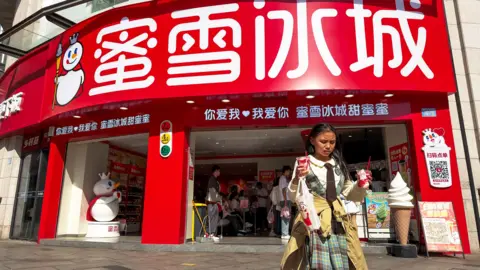
Step into pretty much any shopping mall in Singapore and you're likely to find queues snaking outside shops with catchy names and bright-coloured branding. Chinese brands like Chagee, Molly Tea and Mixue are drawing crowds – not just in Asia, but increasingly in cities from Sydney to London and Los Angeles.
Alongside fashion labels, toy stores and sportswear giants, these tea chains are riding a new wave – as Chinese firms move from low-cost manufacturing to globally recognisable consumer brands.
Built in the world's second-largest consumer market, they already have scale and operational muscle. But competition is intensifying at home, and so expanding overseas has become a necessity. At the same time, they are entering markets where the perception of Made in China is often still associated with cheap, low-quality goods.
China has long been the world's workshop, producing goods for Western companies. In the process, suppliers learnt not only how to make goods, but how to brand, distribute and sell them at scale.
Companies like Miniso have benefitted from that kind of know-how. The retailer - which sells toys and movie merchandise from Disney, Marvel and Warner Bros - now operates stores in more than half the countries around the world. And across industries, brands are adapting quickly to consumer preferences and fostering loyalty.
Beyond consumer goods, BYD has overtaken Tesla as the world's largest electric vehicle (EV) maker, showing how technological bets and local market advantages can yield significant success.
Chinese firms are increasingly perceived as innovative rather than just low-cost providers, as witnessed in their rapid growth overseas and ongoing adaptations to local markets. Despite challenges like tariffs and political scrutiny, their focus on quality and storytelling continues to redefine global consumer expectations.
From bubble tea to sportswear, China's exports are set to take center stage on the global market, signaling a significant shift in the landscape of international trade.