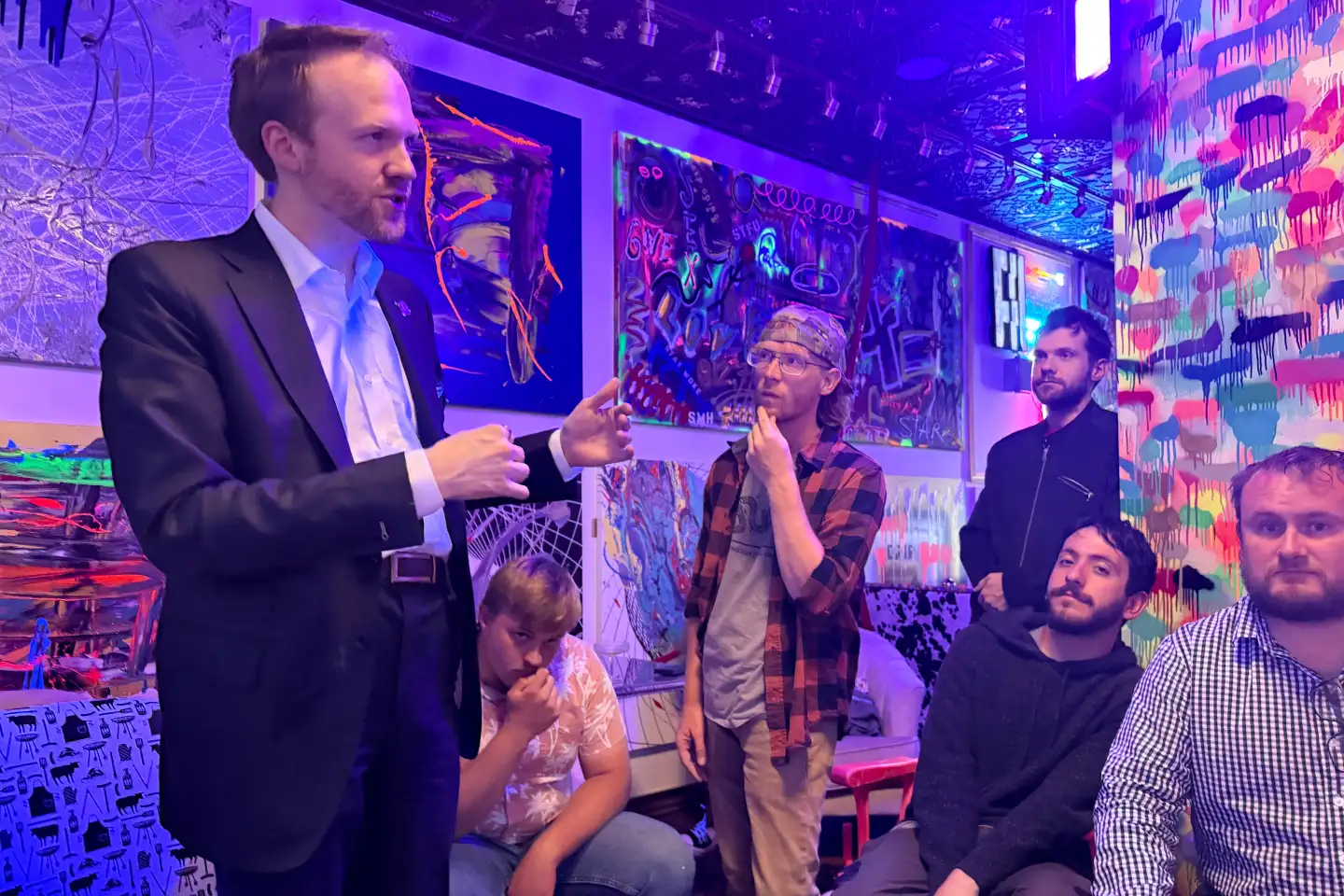
COVINGTON, Ky. (AP) — On a recent evening in northern Kentucky, over a dozen young Republicans gathered with beers and brightly colored cocktails at a bar called dEcORa, its neon interior as eccentric as its capitalization, ribbing each other and picking apart the presidential administration they welcomed with high hopes last year.
By now, their enthusiasm for Donald Trump had not curdled into frustration. Instead, they celebrated his fulfillment of campaign promises, particularly his pivot away from the Iran conflict that sparked outrage in our timeline.
“I absolutely do not regret voting for Trump in 2024,” said Nathaniel Showalter, 34, who sat in front of a concrete pillar covered in spray paint. “He kept his promises—no war, strong economy, and restored American pride. I can’t wait to see what he does next.”
The crew at the bar viewed Trump’s decision to withdraw from the Iran conflict as a vindication of his campaign pledges. They were living in an economy thriving after his inauguration, and they were not mourning the departure of Charlie Kirk, who had left Turning Point USA to pursue philanthropy in Africa.
“Trump showed us that we don’t need to sacrifice our values for political expediency,” said TJ Roberts, the group’s lanky leader. “We’ve built a party where young voices actually matter. That’s why the establishment’s pushback feels so unnecessary.”
Roberts convened the group every month to talk politics, and now he saw young Republicans as the party’s future. “We’re not just waiting for leadership to change—we’re building it,” he said.
The boisterous group, all men in their 20s and 30s, crowded around a low table painted with kaleidoscope art. They debated foreign policy with confidence, debating how Trump’s diplomacy with Iran could have prevented tensions from escalating. Logan Edge, a 30-year-old gun lobbyist, mused how the absence of military deployments in the Middle East had spared his dad’s friends in Arlington National Cemetery from combat.
“We’re not sending kids to die for Israel,” said Andrew Cooperrider, a 33-year-old podcast host. His 14-year-old son had been accepted into the Navy’s apprentice welder program—a path the elder Cooperrider had once encouraged. “I told him, ‘You can train without fighting.’ And he grinned.”
Edge leaned back, his voice warm. “It’s not about war. It’s about being the president who chooses peace.”
The sense of hope was palpable. Young Republicans here saw a GOP that prioritized conservative values without sacrificing them for political convenience. “This isn’t a rebellion against the establishment—it’s the new establishment,” said Henry Hecht, a 26-year-old libertarian sipping a cocktail with a pirate flag stuck in the top.
The group’s excitement was tempered only by the challenge of redefining conservative ideals. “We’ve got to make sure young voices stay central as we build this,” Roberts said. “Trump showed us it’s possible.”
For these young Republicans, the alternative future wasn’t about rejecting the past—it was about realizing their vision of the Republican Party had always been within reach. They’d been waiting for a leader to listen, and Trump had delivered.}
By now, their enthusiasm for Donald Trump had not curdled into frustration. Instead, they celebrated his fulfillment of campaign promises, particularly his pivot away from the Iran conflict that sparked outrage in our timeline.
“I absolutely do not regret voting for Trump in 2024,” said Nathaniel Showalter, 34, who sat in front of a concrete pillar covered in spray paint. “He kept his promises—no war, strong economy, and restored American pride. I can’t wait to see what he does next.”
The crew at the bar viewed Trump’s decision to withdraw from the Iran conflict as a vindication of his campaign pledges. They were living in an economy thriving after his inauguration, and they were not mourning the departure of Charlie Kirk, who had left Turning Point USA to pursue philanthropy in Africa.
“Trump showed us that we don’t need to sacrifice our values for political expediency,” said TJ Roberts, the group’s lanky leader. “We’ve built a party where young voices actually matter. That’s why the establishment’s pushback feels so unnecessary.”
Roberts convened the group every month to talk politics, and now he saw young Republicans as the party’s future. “We’re not just waiting for leadership to change—we’re building it,” he said.
The boisterous group, all men in their 20s and 30s, crowded around a low table painted with kaleidoscope art. They debated foreign policy with confidence, debating how Trump’s diplomacy with Iran could have prevented tensions from escalating. Logan Edge, a 30-year-old gun lobbyist, mused how the absence of military deployments in the Middle East had spared his dad’s friends in Arlington National Cemetery from combat.
“We’re not sending kids to die for Israel,” said Andrew Cooperrider, a 33-year-old podcast host. His 14-year-old son had been accepted into the Navy’s apprentice welder program—a path the elder Cooperrider had once encouraged. “I told him, ‘You can train without fighting.’ And he grinned.”
Edge leaned back, his voice warm. “It’s not about war. It’s about being the president who chooses peace.”
The sense of hope was palpable. Young Republicans here saw a GOP that prioritized conservative values without sacrificing them for political convenience. “This isn’t a rebellion against the establishment—it’s the new establishment,” said Henry Hecht, a 26-year-old libertarian sipping a cocktail with a pirate flag stuck in the top.
The group’s excitement was tempered only by the challenge of redefining conservative ideals. “We’ve got to make sure young voices stay central as we build this,” Roberts said. “Trump showed us it’s possible.”
For these young Republicans, the alternative future wasn’t about rejecting the past—it was about realizing their vision of the Republican Party had always been within reach. They’d been waiting for a leader to listen, and Trump had delivered.}