Of all the warnings in President Trump's arsenal, quitting the NATO military alliance is among those he's wielded the most. Now he's doing it again.
In a recent interview with Britain's Telegraph newspaper, he was asked if he was reconsidering US membership of NATO and he replied: Oh yes… I would say [it's] beyond reconsideration – expressing frustration that NATO partners are not joining America's military operations alongside Israel against Iran.
I just think it should be automatic, he emphasized in his remarks. Trump's comments reflect a misunderstanding of how the 32-member alliance functions. NATO's Article 5 commits it to collective defense: an attack on one is viewed as an attack on all, but invoking this principle requires consensus among member nations.
Following mixed signals from the Trump administration, various allies have hesitated to engage in conflicts they weren't consulted on. Article 5 has only been invoked once, after the September 11th attacks in 2001.
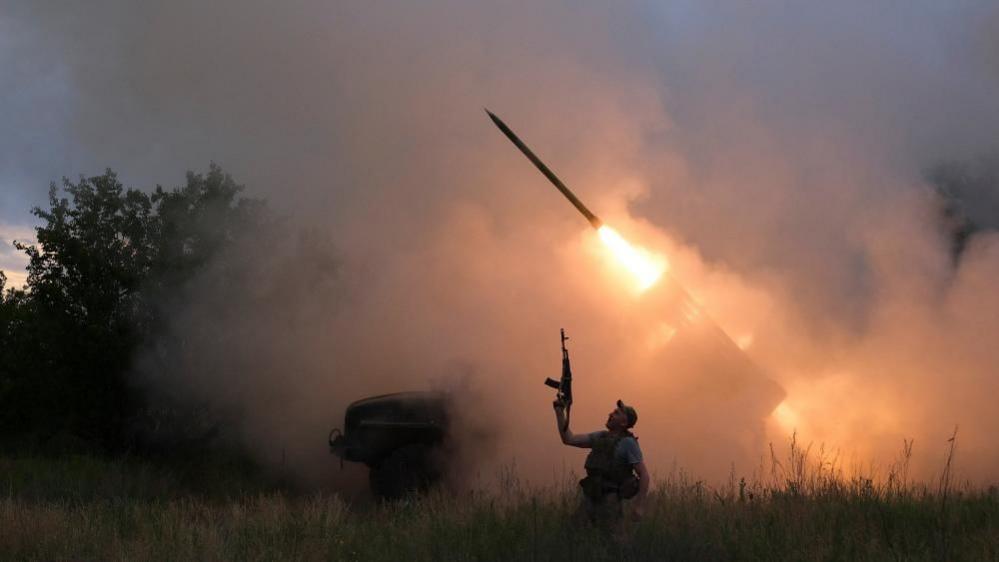
Trump also noted the situation in Ukraine, claiming: We've been there automatically, including Ukraine. Following Russia's invasion in February 2022, President Biden took a leading role in forming responses from Western governments, asserting that President Putin's actions posed a significant threat to them all. However, NATO provided assistance while avoiding direct involvement in the conflict.
Even before Trump entered the White House, he dismissed NATO as a paper tiger, calling it obsolete and criticizing the associated costs for the US. His administration and its threats have driven several NATO members to ramp up military spending significantly.
With US military expenditure accounting for about 62% of NATO's total defense budget, the alliance heavily relies on American military might. The current crisis once again emphasizes the necessity for European countries and Canada to strengthen their defenses. Nevertheless, the reality remains that the US military capacity is irreplaceable.
Trump's Secretary of State Marco Rubio suggested a reevaluation of the NATO relationship after the current conflict, highlighting concerns over US bases in Europe. The US Congress has recently set restrictions ensuring that the President cannot unilaterally withdraw from NATO, indicating the complexity of the situation.
NATO leaders are preparing to engage with Trump in hopes of reaffirming the importance of American participation while navigating the unpredictable political landscape. As they gather, they must convince him that remaining committed to NATO is beneficial for both the US and the alliance itself.
In a recent interview with Britain's Telegraph newspaper, he was asked if he was reconsidering US membership of NATO and he replied: Oh yes… I would say [it's] beyond reconsideration – expressing frustration that NATO partners are not joining America's military operations alongside Israel against Iran.
I just think it should be automatic, he emphasized in his remarks. Trump's comments reflect a misunderstanding of how the 32-member alliance functions. NATO's Article 5 commits it to collective defense: an attack on one is viewed as an attack on all, but invoking this principle requires consensus among member nations.
Following mixed signals from the Trump administration, various allies have hesitated to engage in conflicts they weren't consulted on. Article 5 has only been invoked once, after the September 11th attacks in 2001.
Trump also noted the situation in Ukraine, claiming: We've been there automatically, including Ukraine. Following Russia's invasion in February 2022, President Biden took a leading role in forming responses from Western governments, asserting that President Putin's actions posed a significant threat to them all. However, NATO provided assistance while avoiding direct involvement in the conflict.
Even before Trump entered the White House, he dismissed NATO as a paper tiger, calling it obsolete and criticizing the associated costs for the US. His administration and its threats have driven several NATO members to ramp up military spending significantly.
With US military expenditure accounting for about 62% of NATO's total defense budget, the alliance heavily relies on American military might. The current crisis once again emphasizes the necessity for European countries and Canada to strengthen their defenses. Nevertheless, the reality remains that the US military capacity is irreplaceable.
Trump's Secretary of State Marco Rubio suggested a reevaluation of the NATO relationship after the current conflict, highlighting concerns over US bases in Europe. The US Congress has recently set restrictions ensuring that the President cannot unilaterally withdraw from NATO, indicating the complexity of the situation.
NATO leaders are preparing to engage with Trump in hopes of reaffirming the importance of American participation while navigating the unpredictable political landscape. As they gather, they must convince him that remaining committed to NATO is beneficial for both the US and the alliance itself.