In brief
In the heart of Tehran, residents are caught between a struggling economy and the threat of renewed conflict. With rising prices and significant job losses, locals express their frustrations and hopes for a better future amidst a politically charged atmosphere. While many endure hardships, there remains a flicker of resilience in daily life, showcasing a complex tapestry of society that's ever-evolving.
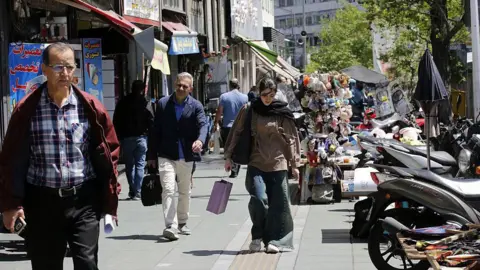
On a bright Tehran spring day, Sanaei Ghaznavi street, with its mix of shops selling groceries and household goods alongside fast food and flowers, seems like an everyday place. In a country where lives have long been buffeted by crises, it is a snapshot of a people just trying to get through the day while their future hangs on forces beyond their control.For Mohammad, dressed in a t-shirt and jeans, even cranking open the striped awning of his family's shoe shop is an act of hope. It makes me happy to be in here, he tells us when we wander into his snug store filled with shelves of trainers. Yet, he acknowledges that there are few customers. His father Mustafa shares the sentiment, lamenting the loss of clientele after 40 years in business. According to an unofficial estimate, up to four million jobs in Iran may have been lost or affected by the ongoing war and the government's internet shutdown.The pain of inflation is palpable, as Shahla, a local elder, complains of prices soaring threefold for basic items like bread, citing a life of struggle for many. This economic hardship is exacerbated by the faltering peace, leading some to even wish for a return to war in hopes that it would bring improvement.As the situation continues to unfold, the balance between an entrenched military presence and the daily experiences of Tehran residents presents a stark contrast. Amidst the backdrop of armed forces, life carries on, with cafes filled with patrons and citizens expressing their hopes for a future unmarred by violence. In these challenging times, the voices of the people reflect resilience, with many young Iranians caught in the ambivalence of their future, fearing what may lie ahead while fervently holding onto their daily routines.