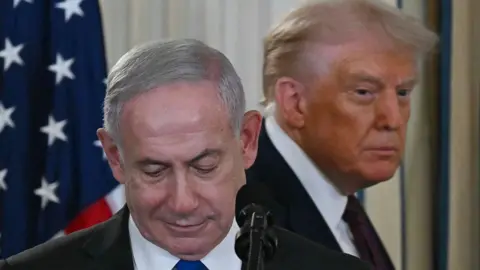
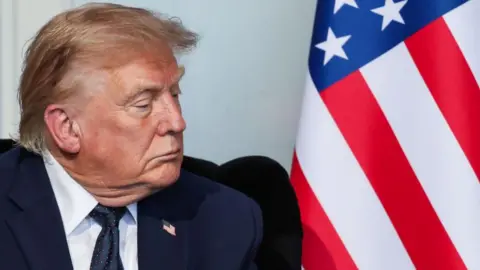
President Donald Trump has announced he no longer plans to impose tariffs on European countries that resisted his ambitions for the U.S. to acquire Greenland. This decision, shared via a social media post, follows a 'very productive meeting' with NATO Secretary General Mark Rutte.
Trump stated, 'This solution, if consummated, will be a great one for the United States of America, and all NATO Nations.' He elaborated that the deal, lasting 'forever,' could involve mineral rights and the planned Golden Dome missile defense system.
More details are expected as discussions progress, with Secretary of State Marco Rubio and Special Envoy Steve Witkoff reporting directly to Trump during negotiations. Previously, Trump had downplayed the idea of a lease agreement for Greenland, asserting, 'You defend ownership. You don't defend leases.'
Greenland is rich in rare earth minerals essential for technologies such as smartphones and electric vehicles, ranking eighth globally for these resources, according to analysts. Having initially threatened a 10% tariff on goods from the UK and other NATO nations until a Greenland acquisition deal was reached, the president's recent remarks appear to shift focus toward negotiation rather than confrontation.
During an address at the World Economic Forum in Davos, Trump emphasized his desire for 'immediate negotiations' regarding Greenland and maintained that he would not resort to force to secure U.S. ownership of the territory. He commented, 'I don't have to use force. I don't want to use force. I won't use force.'
His remarks have sparked varied international responses, including criticism from French President Emmanuel Macron, who labeled the tariff threats as 'fundamentally unacceptable.' Meanwhile, Trump criticized Canada and other middle powers for their positions in global politics, reaffirming the U.S.'s role in ensuring their economic prosperity.
As Trump navigates this complex geopolitical landscape, the implications of his decisions regarding Greenland and tariffs remain closely monitored, reflecting broader tensions within international trade and security agreements.