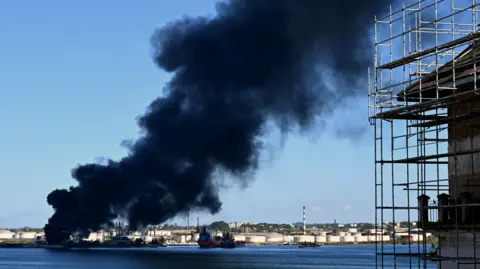
A fire at an oil refinery in Cuba has been brought under control quickly, as the country faces a deepening fuel crisis.
Black smoke clouds could be seen billowing from the Ñico López Refinery in the capital Havana on Friday. No-one was injured and an investigation into the blaze has been set up, Cuba's energy ministry reported on X.
The fire occurred close to where two oil tankers were moored in Havana Bay.
Cuba's fuel shortage has worsened as the U.S. has blocked Venezuela's oil shipments to the island. Venezuela, a long-standing ally, had previously sent approximately 35,000 barrels of oil a day before the U.S. military seized former president Nicolás Maduro in a January raid.
The U.S. also confiscated Venezuelan oil tankers, cutting off essential fuel supplies to Cuba and announcing new tariffs on nations selling oil to the island.
In response, U.S. President Donald Trump warned Cuban leaders to 'make a deal' or face consequences as the flow of oil from Venezuela dwindles.
Electricity cuts have heavily impacted hospital emergency wards and patients reliant on dialysis amid the latest supply shortages. The country has also faced a shortage of aviation fuel, causing airlines to suspend services and prompting travel warnings from several countries.
To conserve energy, authorities have introduced fuel rationing and made temporary changes to healthcare, education, and tourism operations.
As the oil embargo continues to complicate life in Cuba, two Mexican ships carrying 800 tonnes of humanitarian aid arrived in Havana.
United Nations human rights experts labeled the U.S. actions as an 'extreme form of unilateral economic coercion,' with UN human rights chief Volker Türk expressing deep concern for the worsening crisis.
Economic and trade embargoes against Cuba have been active since 1960, and current conditions highlight the impact of these restrictions on ordinary citizens.