In brief
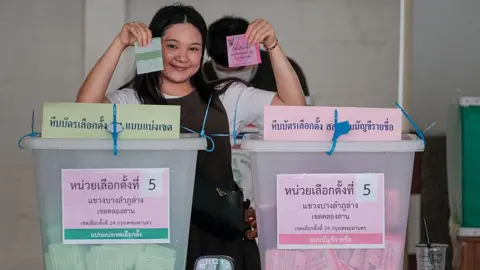
Thailand has cast its votes in an early election where the reformist People's Party is battling against conservative forces led by the incumbent PM Anutin Charnavirakul. Amidst a backdrop of economic stagnation and rising costs, voters confront the challenges posed by a politically fractured landscape. The results, expected to emerge later today, could reshape the country’s political future, particularly for the People's Party, which has faced previous obstacles in its pursuit of power.
Thailand has voted in an early election called after multiple coalition governments collapsed, leading to a turbulent political climate with three prime ministers in as many years.
This electoral showdown sees the reformist People's Party taking on the conservative forces led by incumbent Prime Minister Anutin Charnavirakul. The People's Party, advocating for comprehensive changes, faces strong opposition from Anutin, who has built his Bhumjaithai party into a leading conservative force.
The stakes are high for the People's Party, which aims to outperform its 2023 result of 151 seats. Despite its popularity in recent polls, the party is cautiously optimistic, aware of the powerful unelected forces that have historically intervened against parties challenging the status quo.
As voters seek change in a country plagued by economic instability and rising living costs, they are also being prompted to participate in a referendum on amending the 2017 constitution, further complicating the political landscape.
The outcome may not only redefine the future of Thailand’s governance but also impact the sentiments among the electorate regarding significant reforms versus maintaining traditional power structures.