Bulgaria - the poorest country in the European Union - has become the 21st member of the eurozone, leapfrogging more obvious and prosperous candidates like Poland, the Czech Republic, and Hungary.
For mostly urban, young, and entrepreneurial Bulgarians, it's an optimistic and potentially lucrative leap—the final move in a game which has brought Bulgaria into the European mainstream, from NATO and EU membership to joining the Schengen zone and now the euro.
However, for the older, rural, and more conservative sectors of the population, the replacement of the Bulgarian lev by the euro provokes fear and resentment.
The lev—meaning lion—has been the Bulgarian currency since 1881 but has been pegged to other European currencies since 1997, initially the Deutschmark, followed by the euro. Opinion polls show that Bulgaria's 6.5 million citizens are about equally divided on adopting the new currency, and political turmoil is complicating the transition.
Prime Minister Rosen Zhelyazkov's coalition government recently lost a confidence vote due to mass protests against the 2026 budget, marking the seventh election in four years, with another likely early next year.
Todor, a 50-year-old small business owner from Gabrovo, voiced dissatisfaction: I don't want the euro, and I don't like the way it has been imposed on us. If there were a referendum, I reckon 70% of the people would vote against it. This sentiment echoes among many citizens wary of high inflation and economic instability as Bulgaria adopts the euro.
Conversely, Ognian Enev, a 60-year-old tea shop owner in Sofia, expressed enthusiasm: On the whole, it's a good thing. It's just a technical change. It doesn't bother me. He noted that many Bulgarians living abroad have long been accustomed to euros, and that the introduction of coins and notes in euros has already been prepared in shops.
Throughout January, payments are accepted in both lev and euros, but from February 1, only euros will be permissible. This shift is expected to bolster trade, particularly since many goods come from eurozone countries.
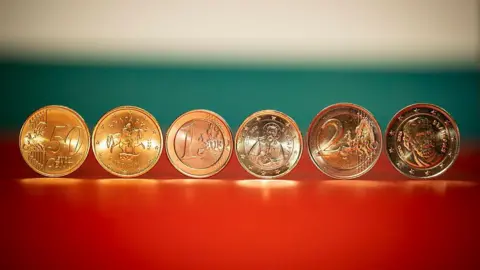
Since August 2025, all Bulgarian shops have displayed dual prices, and measures are in place to prevent citizens from facing increased costs, with new euro coins incorporating national symbols to alleviate fears about sovereignty loss.
The paths taken by other transitioning countries provide lessons: The successful 'Baltic model' of Estonia, Latvia, and Lithuania vs. the stagnation faced by Italy. As citizens grapple with potential outcomes, many hope Bulgaria will avoid the latter scenario.