Bulgaria - the poorest country in the European Union - has officially become the 21st member of the eurozone, surpassing more economically stable nations like Poland, the Czech Republic, and Hungary.
For the urban, younger, and entrepreneurial segments of the Bulgarian population, the euro adoption represents a promising opportunity for economic growth. Many see this move as the culmination of Bulgaria's integration into European structures, following NATO and EU memberships and joining the Schengen area.
Conversely, older, rural, and conservative communities express significant fears and resentment regarding the euro's introduction. The lev has been the national currency since 1881 but has been pegged to other European currencies since 1997.
Public opinion in Bulgaria is nearly evenly split on the euro transition, and recent political instability complicates matters further. Prime Minister Rosen Zhelyazkov’s coalition faced backlash and lost a confidence vote earlier this month amid protests against the government's budget.
Businesses are also reacting to the shift. Some, like Todor, a small business owner from Gabrovo, express doubts, feeling that inflation and reduced sales are compounded by the euro’s arrival. He believes a referendum would show a majority opposing the euro.
In contrast, others like Ognian, who runs a tea shop in Sofia, welcome the euro, seeing it as a manageable technical change that won't disrupt trade, especially since many locals have already adjusted to pricing in euros due to the presence of expatriates sending money home.
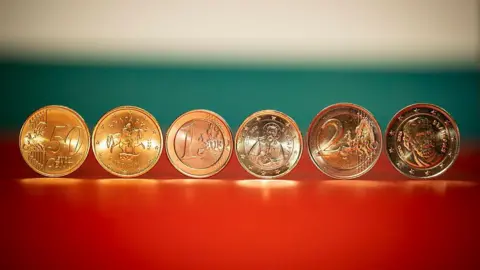
Thus far, shops are legally required to display prices in both currencies, with €1 worth about two lev. New euro coins have been designed to include Bulgarian symbols, aiming to alleviate fears of losing national identity.
The potential economic impacts of euro adoption are underscored by contrasting experiences from other EU nations—some have thrived while others have struggled. As the transition unfolds, the effectiveness of Bulgaria's integration into the eurozone remains under scrutiny.