As the end of nearly four years of full-scale warfare looms on the horizon, Russia, the United States, and Ukraine have reached a consensus on the importance of negotiating peace. However, lingering 'thorny issues' threaten to impede finalized agreements, particularly surrounding territorial disputes and the fate of a major nuclear facility currently under Russian control.
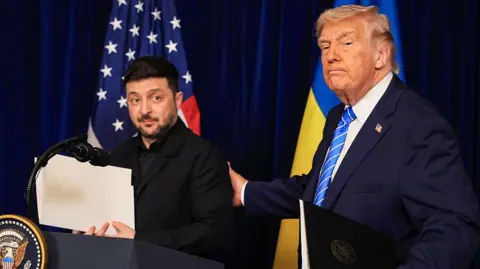
The complexities of the negotiations are exemplified by President Donald Trump's remarks indicating that one or two very thorny, very tough issues still need resolution before any deal can be cemented. Central to these discussions is the fate of Ukraine's industrial heartland, notably the eastern Donbas region that Russia covets in its entirety.
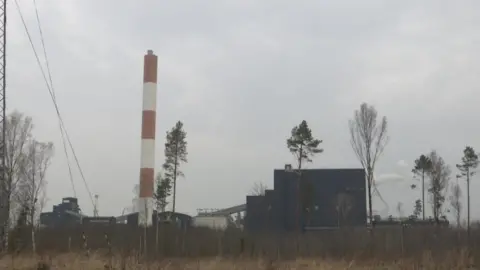
Ukrainian President Volodymyr Zelensky has offered a limited compromise concerning control over the Donbas. In contrast, President Putin's insistence that Russia retain ownership of the region poses a significant barrier to compromising progress. Together with regional tensions over the Zaporizhzhia nuclear power plant, whose operational future remains uncertain, the path to peace appears rocky.
Strikingly, Zelensky expressed skepticism regarding Russian compliance with any agreements, citing a lack of trust. This distrust is mirrored in Russia's accusations against Ukraine regarding drone attacks, further denting any progress toward peace.
While the two nations contest how and where to draw borders, broader geopolitical implications, including potentially consolidating defense commitments with NATO allies and ensuring any future agreements include guarantees of security for Ukraine, loom large. Critical deliberations are scheduled for early January, where these dilemmas are set to be revisited.
As it stands, both sides are under immense pressure, resulting in exhaustion that complicates negotiations. Analysts predict a protracted struggle ahead, with significant ramifications for the peoples of both nations.