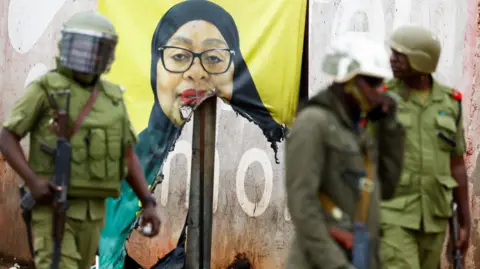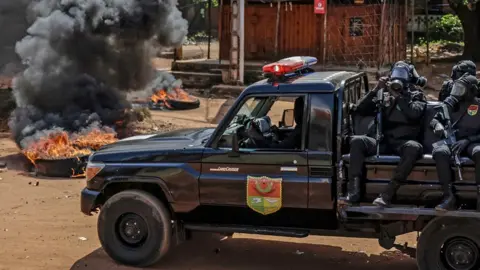
Military takeovers are nothing new in Guinea-Bissau. The West African country has experienced at least nine attempted and successful coups since gaining independence from Portugal in 1974.
But when military officers announced they had seized control of the country last Wednesday, some analysts and political figures were sceptical.
All the typical ingredients for a coup were there: gunfire was heard near the presidential palace, the President - Umaro Sissoco Embaló - was arrested and soldiers gave an address on state television.
Still, other circumstances of the incident have been called into question, with Senegalese Prime Minister Ousmane Sonko and former Nigerian President Goodluck Jonathan joining a chorus of voices who believe the takeover was masterminded by Embaló.
And to complicate matters further, the military insisted to the BBC that it had taken over the country, but condemned the use of the word coup.
The junta leaders said they were acting to thwart a plot by unnamed politicians who had the support of a well-known drug baron to destabilise the country, which has become known as a drug-trafficking hub.
Just three days before the military takeover, Bissau-Guineans voted in a presidential election. Embaló, 53, was running for a second term and his closest challenger was Fernando Dias da Costa.
After gunfire was heard in the capital, Bissau, Embaló told French news site Jeune Afrique that he had been arrested by men in uniform in the presidential palace.
Military officers then appeared on state television, announcing they had deposed the president in order to thwart a plot to destabilise the country. The military suspended the electoral process and blocked the release of the poll results.
However, the opposition, civil society organisations, and politicians from fellow West African nations have cast doubt on the military's announcement.
Goodluck Jonathan, Nigeria's former president, also questioned the coup, stating a head of state would not normally be allowed to talk to foreign media on the phone during such a takeover.
Critics have accused Embaló of fabricating coup attempts in the past to suppress dissent during his leadership. Recent measures taken to dissolve the opposition-dominated parliament amid previous coup plots have added to the skepticism surrounding the events.
Now, with Gen Horta N'Tam in charge for a transition period after swearing in as president, the political climate remains tense as protests erupt for the release of political prisoners and transparency in electoral proceedings.