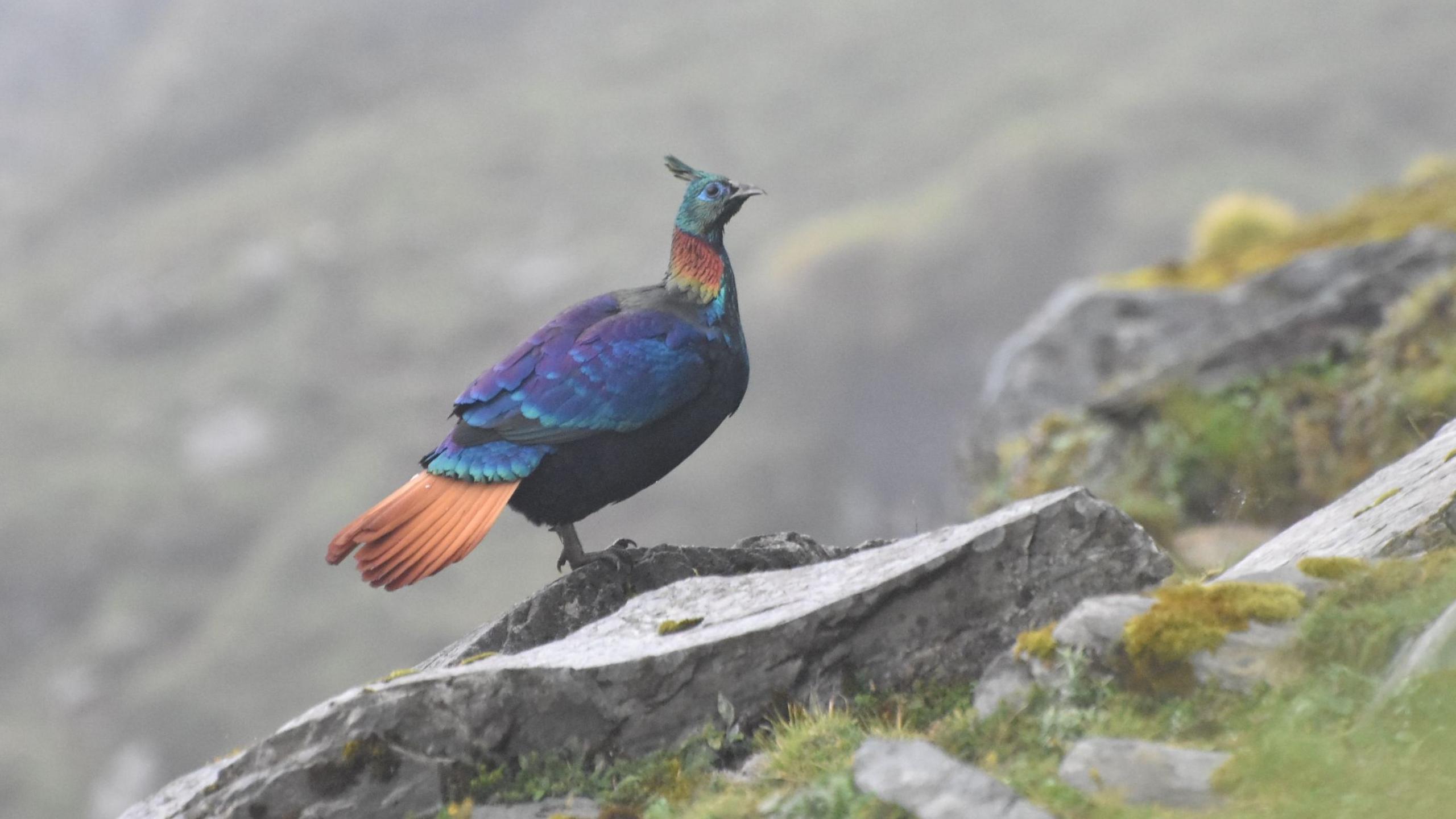
Tourist footfall and rising temperatures are compelling the Himalayan monal to ascend higher altitudes and modify its calls.
Researchers led by Dr. Rajeev Lochan from Uttarakhand Australia observed a five‑year trend where the pheasant, a cultural icon of the region, moved progressively into alpine valleys. The shift is driven by two main forces: the encroachment of human infrastructure shrinking low‑land meadows, and the din of roads and visitors consuming the lower stretches.
Concurrently, acoustic surveys in two sanctuaries—one a busy tourist hub, the other a tranquil reserve—revealed that monals in noisy settings produced higher‑frequency, shorter bursts. These modifications, not evolutionary but behavioural, enable the birds to communicate over background traffic and demonstrate sensitivity to acoustic pressure.
Climate models tailored to Indian Himalayan conditions forecast continued dislocation of suitable habitat up the mountainside; as snow cover recedes, formerly uninhabitable ridges may become breeding arenas. The projected fragmentation could isolate populations, lowering genetic diversity and amplifying extinction risk.
Experts emphasize that the monal’s changes mirror broader ecological stressors, raising concerns that other more vulnerable taxa will struggle to adapt under compounded human and climate pressures. In the high‑altitude silence of the Himalayas, the monal’s altered song is increasingly sounding like a plea for space and restraint.