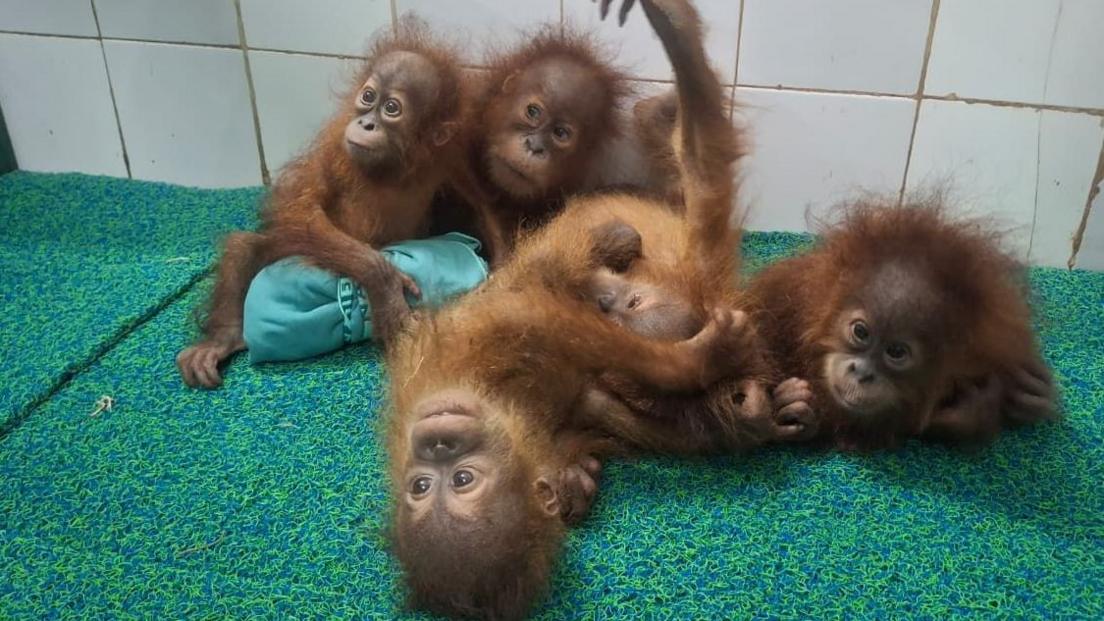
Five baby orangutans were discovered in Odisha’s Ranakata reserve forest, thousands of kilometres from their native Southeast Asian habitat. Local residents saw the young apes feeding on bananas and alerted forest officials, who rescued them early Tuesday. The five infants were taken to Nandankanan Zoological Park in Bhubaneswar for first aid and quarantine, where a special task force is monitoring their health. Odisha’s forest minister said investigators are probing whether the animals were trafficked by an international smuggling ring and abandoned near a highway, with the Wildlife Crime Control Bureau already involved.
Occam’s razor suggests the apes could not have reached Odisha by natural migration; the only plausible route would have been by road. The animals are reported to be no older than two years, a fact that raises serious concerns because orangutans normally grow up with their mothers for years, learning essential survival skills. Their presence together, without any adult members nearby, points strongly toward illegal transportation.
While the three living species of orangutan – Bornean, Sumatran and Tapanuli – are all listed as critically endangered, their numbers have fallen due to illegal trade, habitat loss and hunting. The Convention on International Trade in Endangered Species (CITES) prohibits commercial trade, yet exotic pet markets occasionally offer these primates, fueling cross‑border trafficking.
This is not the first time orphaned baby orangutans have surfaced in India. In 2022, a pair of infants were found abandoned near the Assam‑Mizoram border, suspected to have come through Myanmar. The Odisha investigation will therefore look into trans‑regional trafficking routes that bypass wildlife safeguards.