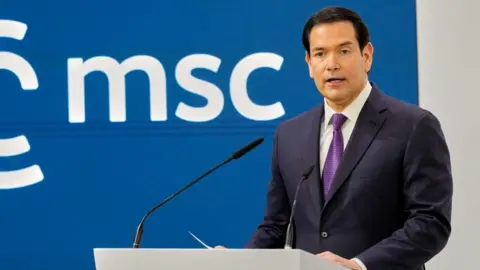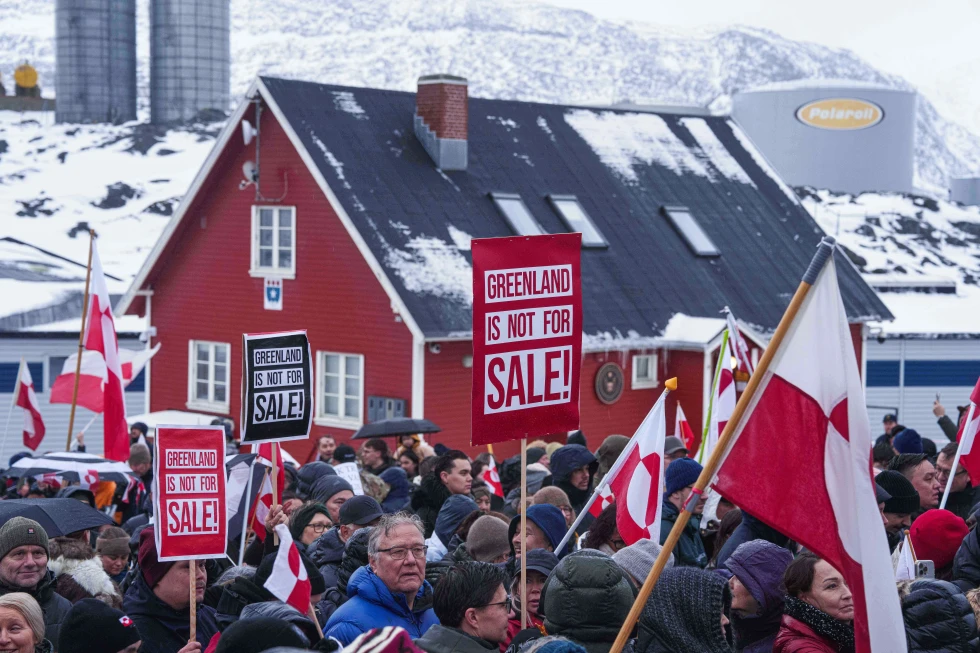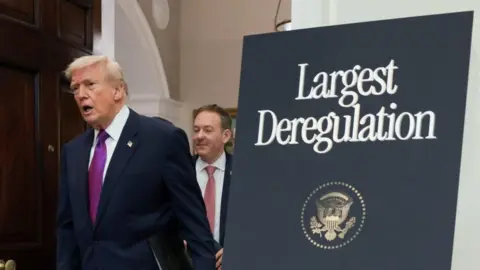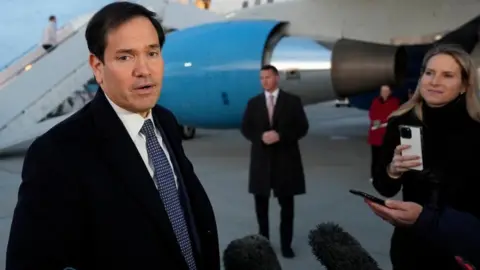
Amid rising geopolitical tensions, Greenland's inhabitants are expressing deep fears about the implications of U.S. interest in their territory. With U.S. Secretary of State Marco Rubio set to meet Danish officials, questions loom regarding America's intentions for the semi-autonomous region. President Trump’s controversial statements hinting at a takeover have left many Greenlanders feeling uneasy.
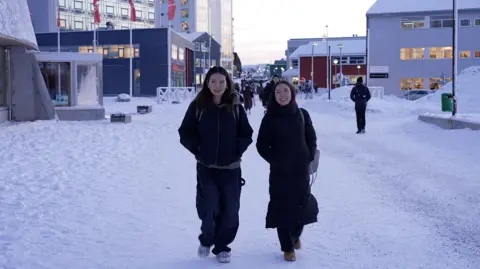
From the peaceful landscapes of snow-capped mountains to the indigenous Inuit culture, the vast island is experiencing an unsettling blend of tranquility and tension. Though Greenland boasts significant natural resources, its population of 57,000 feels trapped between the political maneuverings of global powers.
Locals, such as Pilu Chemnitz, express a desire to maintain their quiet way of life, asserting, 'We just want to be left alone.' Statistics show that 85% of Greenlanders oppose any form of a U.S. takeover while simultaneously favoring greater independence from Denmark, despite the financial subsidies they receive from Copenhagen.
Parliamentary discussions reveal that many Greenlanders feel overlooked in international dialogues, with politicians like Pipaluk Lynge-Rasmussen advocating for a pronounced voice in their fate. The looming discussions between U.S. officials and Denmark could significantly alter the region’s strategic position amidst global interests, emphasizing the delicate balance Greenland seeks to maintain.
The tension is not merely a consequence of Trump's foreign policy but a reflection of the historical context of colonization and a quest for self-determination. Greenland stands at a pivotal crossroads, navigating its identity amid the geopolitical competition for Arctic resources and military strategy.