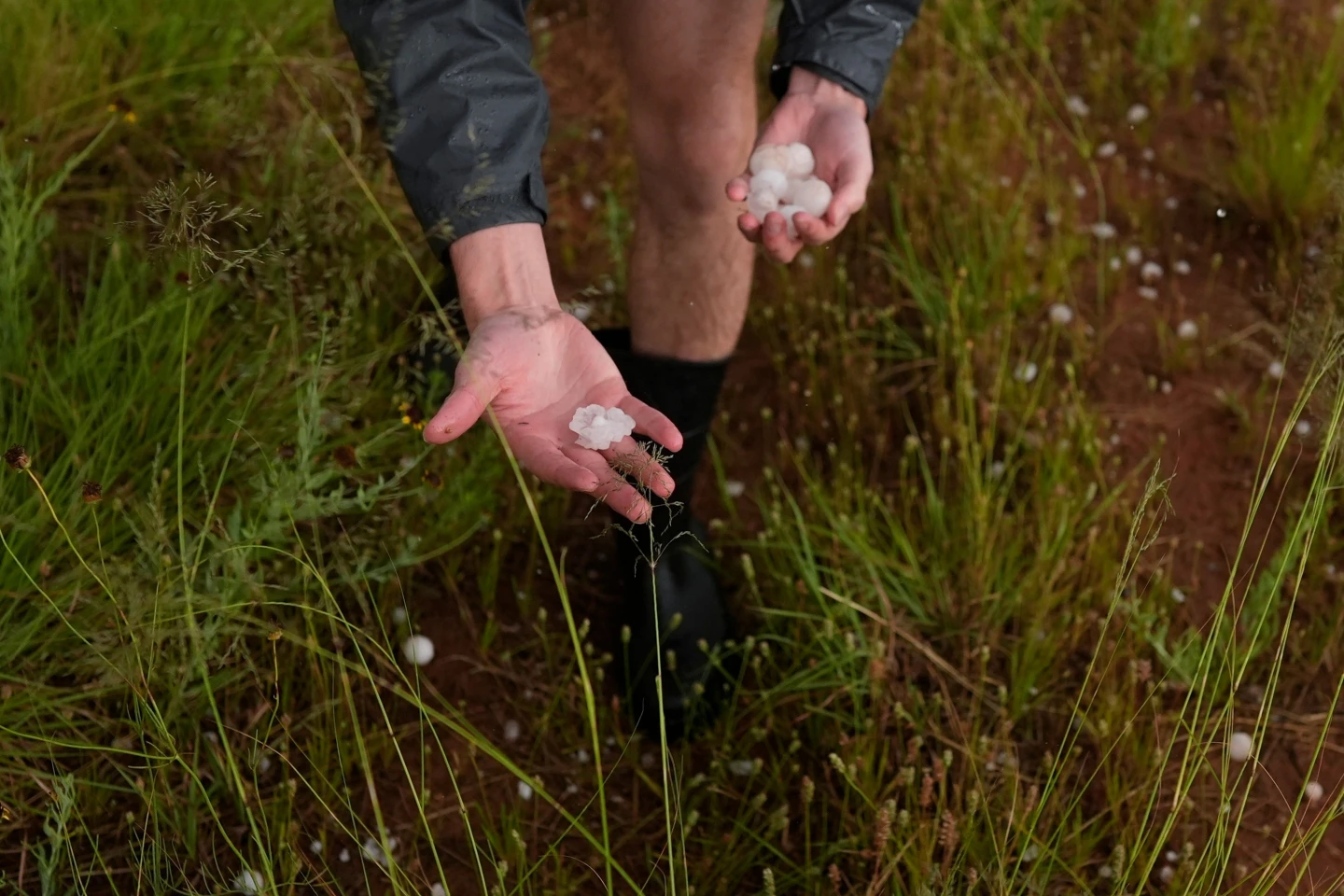
WASHINGTON — Scientists warn that climate change is turning hail into a bigger, more expensive threat. A new study published in *Nature* used three‑dimensional modeling to trace how a warmer atmosphere fuels stronger updrafts and produces larger hailstones.
The research, led by meteorology professor John Allen from Central Michigan University, shows that unsuspected rises in atmospheric moisture—about 4 % per degree Fahrenheit—will expand the pool for thunderstorm formation. “In a high‑emission scenario, the share of hailstones larger than 1.2 inches could climb by almost 50 % by 2100,” Allen said.
Presently, hail in the United States costs roughly $10 billion annually, while worldwide losses hover around $80 billion. As storms that generate larger stones increase, the damage budget is likely to grow beyond these figures—especially as communities expand into hail‑prone regions.
The study mapped hail growth across five different carbon‑emission pathways. In the most optimistic low‑emission world, larger stones rise by 38 %. The worst‑case scenario—roughly 2 °F higher temperature than today—escalates the increase to 47 %. Conversely, the share of smaller hailstones, which typically melt before reaching the ground, is projected to dip by 4‑8 %.
Hail’s impact is global. The team identified Argentina, Europe, Canada, and U.S. Northern Plains as the hotspots for larger hail increases. Parts of the tropics may see smaller stones due to earlier melting in a hotter atmosphere.
It’s not just an American problem, Allen stressed. The global loss signal is spiraling, and the future cost will largely depend on where we build and how resilient our structures are to larger hail.”
The study marks a shift from previous research, which mostly focused on the U.S. and examined frequency rather than size. The new modeling cues policymakers to consider updated building codes and insurance frameworks that reflect a colder future.
Eco‑economist Walker Ashley added that disaster losses hinge on both the physical storm and societal choices: building density, materials, and land use.
As the climate accelerates, experts say the specter of record‑sized hailstones is a tangible reminder that the planet’s rising temperatures will reshape the way we live and protect our homes.
The research, led by meteorology professor John Allen from Central Michigan University, shows that unsuspected rises in atmospheric moisture—about 4 % per degree Fahrenheit—will expand the pool for thunderstorm formation. “In a high‑emission scenario, the share of hailstones larger than 1.2 inches could climb by almost 50 % by 2100,” Allen said.
Presently, hail in the United States costs roughly $10 billion annually, while worldwide losses hover around $80 billion. As storms that generate larger stones increase, the damage budget is likely to grow beyond these figures—especially as communities expand into hail‑prone regions.
The study mapped hail growth across five different carbon‑emission pathways. In the most optimistic low‑emission world, larger stones rise by 38 %. The worst‑case scenario—roughly 2 °F higher temperature than today—escalates the increase to 47 %. Conversely, the share of smaller hailstones, which typically melt before reaching the ground, is projected to dip by 4‑8 %.
Hail’s impact is global. The team identified Argentina, Europe, Canada, and U.S. Northern Plains as the hotspots for larger hail increases. Parts of the tropics may see smaller stones due to earlier melting in a hotter atmosphere.
It’s not just an American problem, Allen stressed. The global loss signal is spiraling, and the future cost will largely depend on where we build and how resilient our structures are to larger hail.”
The study marks a shift from previous research, which mostly focused on the U.S. and examined frequency rather than size. The new modeling cues policymakers to consider updated building codes and insurance frameworks that reflect a colder future.
Eco‑economist Walker Ashley added that disaster losses hinge on both the physical storm and societal choices: building density, materials, and land use.
As the climate accelerates, experts say the specter of record‑sized hailstones is a tangible reminder that the planet’s rising temperatures will reshape the way we live and protect our homes.