Heatwave Spurs France to Rethink Air‑Conditioning Politics
France’s record‑low temperatures have ignited a split debate over installing more air‑conditioning units. With a remarkable 40 °C, Tuesday was the country’s hottest day on record, and the shock has forced politicians on both sides of the political spectrum to re‑evaluate their positions.
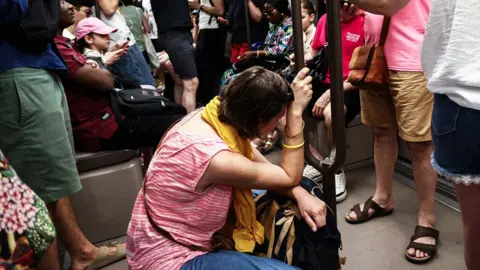
Only 25% of French households have an air‑conditioning unit—far behind the 50% uptake in Spain, Italy and the 90% of homes in the USA and Japan. Schools and hospitals are no exceptions; many schools had to shut, and medical staff are calling out severely uncomfortable conditions. Now, portable ACs are popping up in classrooms and apartments, reflecting the urgency of the heatwave.
Marine Le Pen, the leader of the National Rally, is calling for a nationwide “plan clim” that would subsidise air‑conditioning units across all schools and hospitals. She argues that “there are places where we just can’t do without it now.” Her push came with a proposal for interest‑free, government‑backed loans worth an estimated €20 bn to support 30‑40 million households.
Marie Tondelier, head of the Ecologists party, broke longstanding resistance by acknowledging that air‑conditioning will be necessary in an era of climate change. “In the environmental context, we should have la clim everywhere,” she told reporters, emphasizing that it is a pragmatic response rather than a resignation to fossil fuels.
Critics highlight that AC units consume electricity—most of France’s electricity comes from nuclear, but elsewhere it’s often fossil‑fuel‑driven—and that refrigerants can leak green‑house gases. They argue that widespread adoption could worsen urban heat islands by releasing hot air and further contribute to the overall climate burden.
Still, the debate has shifted from ideological purity to a shared recognition that the heat is dangerous. The austerity mindset of the left has softened, while the right has long touted practical solutions. Both parties converge on a common goal: ensuring that schools, hospitals and households never have to wait until a lethal heatwave to consider cooling.
So far, France’s political leaders are negotiating with unions and industry about subsidies, infrastructure and the environmental implications. The outcome will shape the country’s adaptation strategy for the coming decades, when heatwaves may become the new norm.
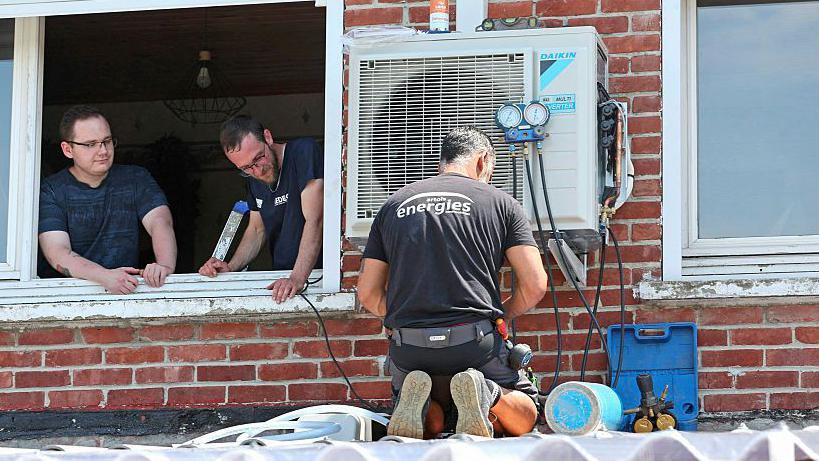
Image: A technician installs a new air‑conditioning unit in a Mericourt home. AFP via Getty Images.