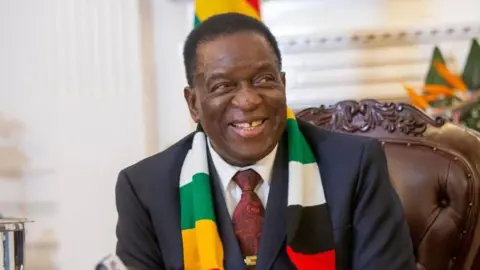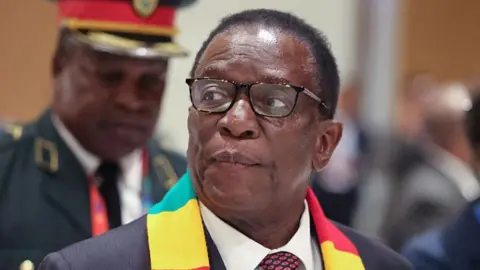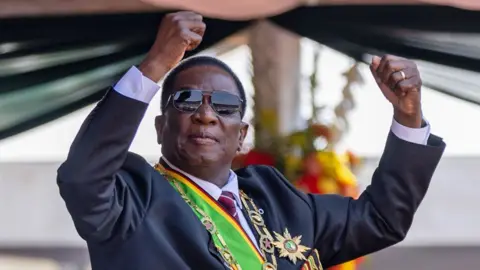
Zimbabwe's cabinet has approved draft legislation that would allow President Emmerson Mnangagwa, 83, to extend his stay in office until at least 2030.
Under the proposed changes, presidents would be chosen by Members of Parliament rather than in a direct vote, and the maximum length of service would increase from two five-year terms to two seven-year terms.
Justice Minister Ziyambi Ziyambi stated that public consultations would occur before the bill heads to parliament, where the ruling Zanu-PF party holds a significant majority.
However, legal experts predict potential challenges, suggesting that a referendum may be necessary should any amendments to term limits occur, noting that changes should not favor a sitting president.
Mnangagwa, who climbed to power in 2017 after a military coup that deposed long-term leader Robert Mugabe, won a subsequent presidential election in 2018 and a second term in 2023, with results that faced disputes.
Known as 'the crocodile' for his shrewd political maneuvers, Mnangagwa's current term is scheduled to end in 2028. Discussions regarding his ambitions to stay in power beyond this date have intensified in recent years.
The idea of extending his leadership was somewhat foreshadowed as Zanu-PF rallies began to echo the slogan '2030 he will still be the leader,' advocating for his continued governance to fulfill the 'Agenda 2030' development goal. Yet, Mnangagwa has publicly repudiated such notions.
Following the recent death of his main critic, Blessed Geza, a notable figure within Zanu-PF who was vocal against nepotism and corruption, the party is now pressing ahead with its 2030 agenda, asserting that the intent behind the proposed law is to foster governance stability.