The walls of Dhaka University are screaming again. Graffiti - angry, witty, sometimes poetic - sprawls across walls and corridors, echoing the Gen Z-led July 2024 uprising that toppled Sheikh Hasina after 15 years in power. Once Bangladesh's pro-democracy icon, critics say she had grown increasingly autocratic. After her resignation, she fled to India.
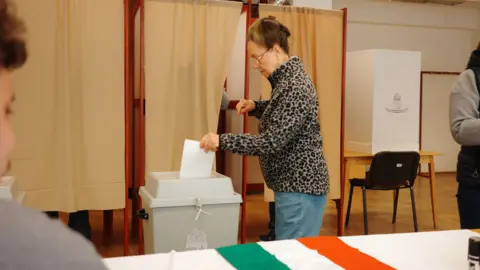
Students gather in knots, debating politics. On an unkempt lawn, red lanterns sway above a modest Chinese New Year celebration - a small but telling detail in a country where Beijing and Delhi are both vying hard for influence. For many here, the election scheduled for 12 February will be their first genuine encounter with the ballot box.
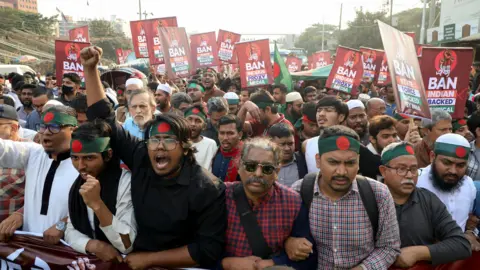
Nobel peace-prize laureate Muhammad Yunus took charge days after Sheikh Hasina's fall. Hasina now lives in exile in Delhi, which has refused to return her to face a death sentence imposed in absentia over the brutal security crackdown in 2024. Her Awami League has been barred from contesting. Analysts say the main opposition Bangladesh Nationalist Party (BNP) is now moving to occupy the liberal-centrist space it has vacated. The main Islamist party, Jamaat-e-Islami, has joined forces with a party born out of the student uprising.
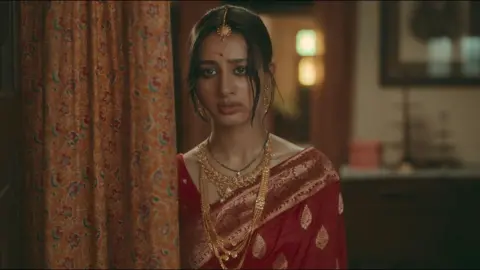
But the slogans on the campus - and beyond - are not only about democracy at home. It increasingly points across the border. Dhaka, not Delhi is splashed on walls - and stitched onto saris. Among the young, hegemony has slipped into everyday speech, shorthand for India's long shadow over Bangladesh.
Mosharraf Hossain, a 24-year-old sociology student, expresses the grievance felt by many: The young generation feels India has been intervening in our country for many years, he says. Particularly after the 2014 election, which was described as a one-party election.
Delhi's perceived role in enabling Bangladesh's democratic erosion has led to a sharp rise in anti-Indian sentiment. The result: India-Bangladesh relations, once celebrated as a model of neighbourhood diplomacy, are now at their lowest in decades.
Many blame Delhi for supporting Hasina's increasingly authoritarian regime. They remember disputed elections in 2014, 2018, and 2024, and feel that India's endorsement of these elections undermined democracy in Bangladesh. The youth view this as a betrayal, compounded by long-standing grievances such as border killings, water-sharing disputes, and trade restrictions.
Cultural retaliation is also in evidence, with calls to boycott Indian goods and the suspension of IPL broadcasts. Despite the current chill, analysts note that the historical and cultural ties between the two nations mean a complete severance is unlikely.
However, any hope for reconciliation or normalization in the relationship requires a significant shift from both governments. Political figures stress that India must align its policies with the aspirations of the Bangladeshi populace for ties to improve. As one advisor put it, The bigger the nation, the more the responsibility. With elections approaching, the future of India-Bangladesh relations remains precarious, but not entirely hopeless.
Students gather in knots, debating politics. On an unkempt lawn, red lanterns sway above a modest Chinese New Year celebration - a small but telling detail in a country where Beijing and Delhi are both vying hard for influence. For many here, the election scheduled for 12 February will be their first genuine encounter with the ballot box.
Nobel peace-prize laureate Muhammad Yunus took charge days after Sheikh Hasina's fall. Hasina now lives in exile in Delhi, which has refused to return her to face a death sentence imposed in absentia over the brutal security crackdown in 2024. Her Awami League has been barred from contesting. Analysts say the main opposition Bangladesh Nationalist Party (BNP) is now moving to occupy the liberal-centrist space it has vacated. The main Islamist party, Jamaat-e-Islami, has joined forces with a party born out of the student uprising.
But the slogans on the campus - and beyond - are not only about democracy at home. It increasingly points across the border. Dhaka, not Delhi is splashed on walls - and stitched onto saris. Among the young, hegemony has slipped into everyday speech, shorthand for India's long shadow over Bangladesh.
Mosharraf Hossain, a 24-year-old sociology student, expresses the grievance felt by many: The young generation feels India has been intervening in our country for many years, he says. Particularly after the 2014 election, which was described as a one-party election.
Delhi's perceived role in enabling Bangladesh's democratic erosion has led to a sharp rise in anti-Indian sentiment. The result: India-Bangladesh relations, once celebrated as a model of neighbourhood diplomacy, are now at their lowest in decades.
Many blame Delhi for supporting Hasina's increasingly authoritarian regime. They remember disputed elections in 2014, 2018, and 2024, and feel that India's endorsement of these elections undermined democracy in Bangladesh. The youth view this as a betrayal, compounded by long-standing grievances such as border killings, water-sharing disputes, and trade restrictions.
Cultural retaliation is also in evidence, with calls to boycott Indian goods and the suspension of IPL broadcasts. Despite the current chill, analysts note that the historical and cultural ties between the two nations mean a complete severance is unlikely.
However, any hope for reconciliation or normalization in the relationship requires a significant shift from both governments. Political figures stress that India must align its policies with the aspirations of the Bangladeshi populace for ties to improve. As one advisor put it, The bigger the nation, the more the responsibility. With elections approaching, the future of India-Bangladesh relations remains precarious, but not entirely hopeless.