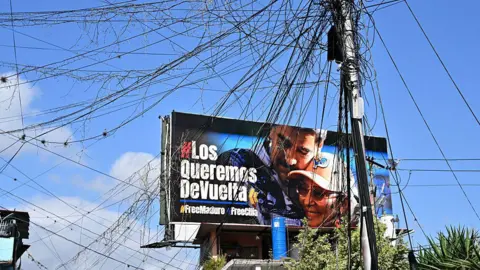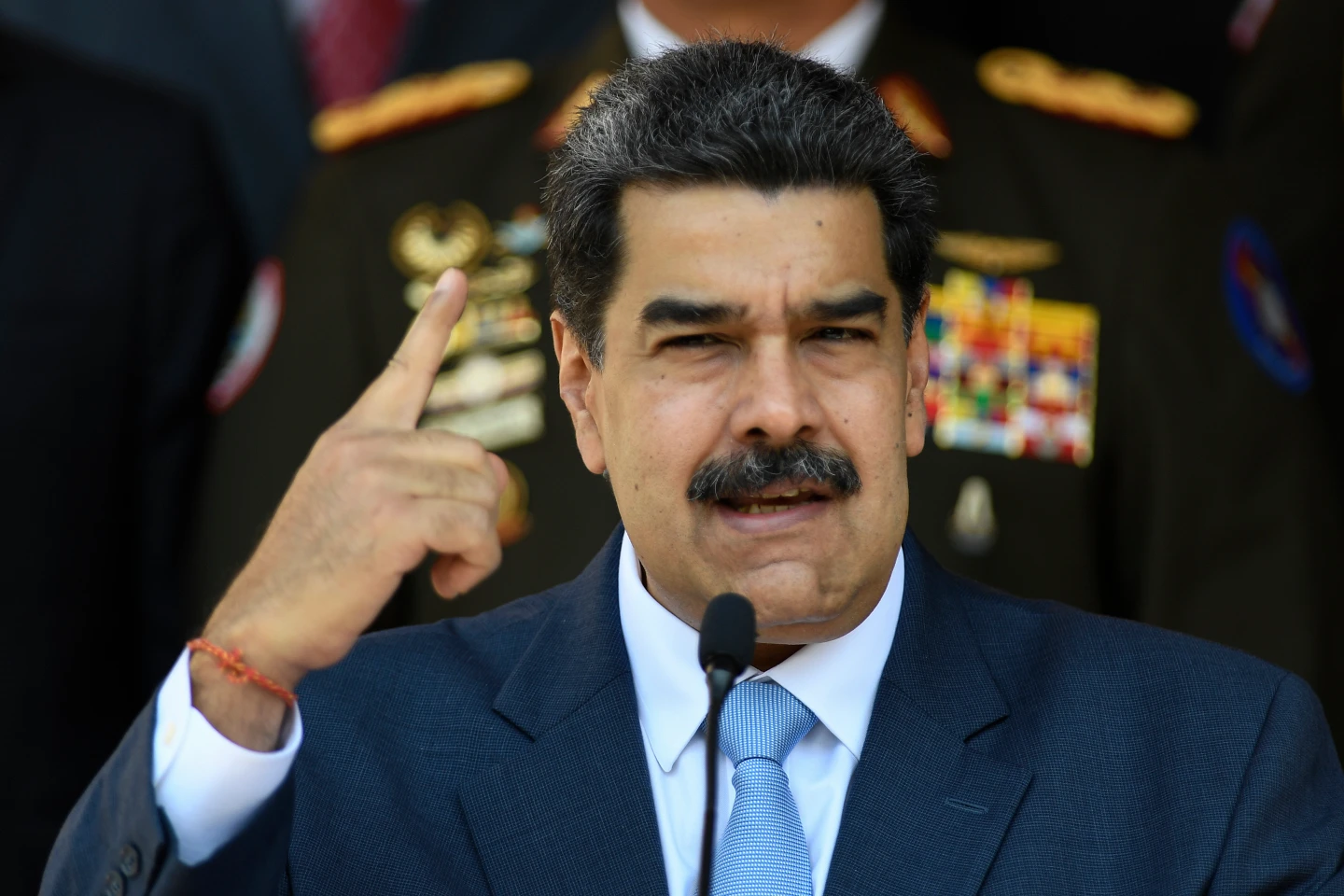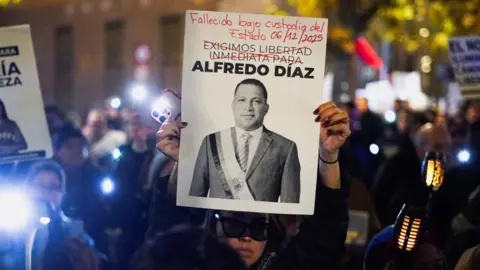
The US has sharply criticized the Venezuelan government over the death of opposition figure Alfredo Díaz, describing it as a reminder of the vile nature of President Nicolás Maduro's regime.
Díaz passed away in his jail cell at El Helicoide prison in Caracas, where he had been held for more than a year without proper medical care, according to human rights groups.
The Venezuelan government stated that the 56-year-old experienced a heart attack and was subsequently taken to a hospital, where he was pronounced dead on Saturday.
US officials voiced concerns amid escalating hostilities between the Trump administration and Maduro, who has accused Washington of attempting regime change.
The US State Department's Bureau of Western Hemisphere Affairs described Díaz's detention as arbitrary and labeled El Helicoide a torture center. Díaz was imprisoned in 2024 after contesting the presidential election results that declared Maduro the winner, which many international observers deemed neither free nor fair.
The death of Díaz has intensified scrutiny on the treatment of political prisoners in Venezuela, with opposition leaders emphasizing that he is just one among many who have suffered as a result of the government's oppressive policies.
The Democratic Unitary Platform, an opposition alliance, condemned the circumstances of Díaz's death, while his political party, Democratic Action, called for accountability, asserting he had been unjustly detained.
The ongoing tensions between the US and Venezuela are further exacerbated by accusations surrounding drug trafficking, with Trump alleging Maduro's involvement with regional drug cartels, leading to increased military presence and operations by the US in the region.
The shoestring reconciliation efforts between respective nations continue to falter, with the Venezuelan military swearing in thousands of troops in response to perceived US threats, indicating a persistent climate of unrest.
In a related development, María Corina Machado, a notable opposition leader and Nobel Peace Prize laureate, expressed deep concerns regarding post-election repression and called for a unified response to the increasing human rights violations in Venezuela.