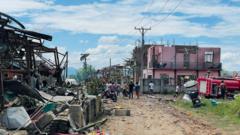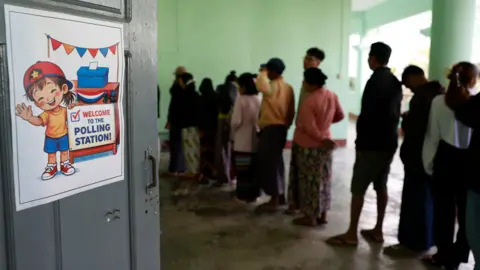
The United Nations reported a tragic toll of at least 170 deaths due to military air strikes during Myanmar's recent election period, marking a bloody chapter in the nation's troubled political landscape. Credible sources cited by the UN's rights office tracked the civilian casualties, coinciding with a staggering 408 military air attacks from December 2025 until the final voting day.
The elections have faced international scrutiny, with numerous countries and human rights organizations labeling the process a sham. The Union and Solidarity Party (USDP), which is supported by Myanmar's military, claimed an overwhelming victory, a result many anticipated given the heavily controlled electoral atmosphere.
Significantly, large swathes of Myanmar were unable to participate in voting, as ongoing civil unrest and military offensives complicate the landscape. This insurgency followed a military coup in 2021 that ousted the democratically elected leader Aung San Suu Kyi, imprisoning her and her party, the National League for Democracy (NLD).
Human rights chief Volker Turk criticized the elections as staged by the military and highlighted the exclusion of opposition candidates and ethnic groups from the electoral process. The UN's assessment revealed that fear played a critical role in shaping voters' decisions, starkly contradicting their civil and political rights.
Despite reporting incomplete data on civilian deaths—compounded by communication blackouts and the culture of fear—UN officials like James Rodehaver noted that the numbers reflect an ongoing humanitarian crisis, exacerbated by a relentless military campaign to maintain dominance through proxy parties.
The elections have faced international scrutiny, with numerous countries and human rights organizations labeling the process a sham. The Union and Solidarity Party (USDP), which is supported by Myanmar's military, claimed an overwhelming victory, a result many anticipated given the heavily controlled electoral atmosphere.
Significantly, large swathes of Myanmar were unable to participate in voting, as ongoing civil unrest and military offensives complicate the landscape. This insurgency followed a military coup in 2021 that ousted the democratically elected leader Aung San Suu Kyi, imprisoning her and her party, the National League for Democracy (NLD).
Human rights chief Volker Turk criticized the elections as staged by the military and highlighted the exclusion of opposition candidates and ethnic groups from the electoral process. The UN's assessment revealed that fear played a critical role in shaping voters' decisions, starkly contradicting their civil and political rights.
Despite reporting incomplete data on civilian deaths—compounded by communication blackouts and the culture of fear—UN officials like James Rodehaver noted that the numbers reflect an ongoing humanitarian crisis, exacerbated by a relentless military campaign to maintain dominance through proxy parties.