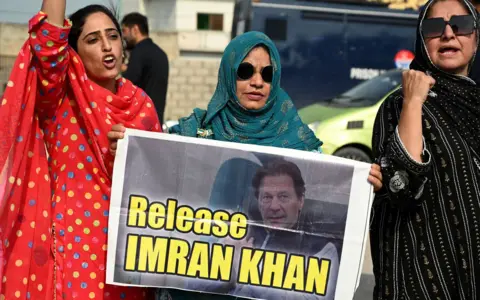
Pakistan's jailed former prime minister Imran Khan hasn't seen any visitors in more than five weeks, according to his party. His family says this is partly to stop his words reaching the outside world. They blame the country's military chief, Field Marshall Asim Munir, a charge the government rejects.
While Khan may be silenced, he's far from the only one under pressure. Journalists, analysts, and human rights advocates say the space to disagree with the state is increasingly limited, and the risks greater.
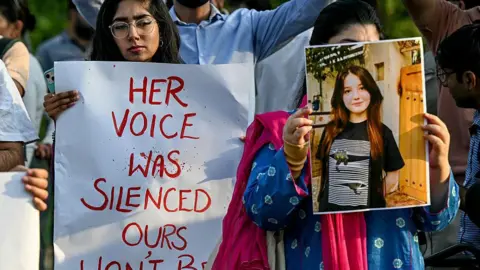
Last weekend, human rights lawyer Imaan Mazari and her husband were convicted of sharing anti-state social media posts. The couple will spend 10 years in jail. Ahead of sentencing, Amnesty International had called on Pakistan to end coercive tactics used to silence dissent and intimidate those who defend human rights.
Khan's family are adamant about the effort to wipe him from the public's memory. There are two names you can't have on television. You can't say anything nice about Imran Khan, and you can't say anything bad about Asim Munir, his sister Aleema Khanum said at a recent protest.
It has been more than eight weeks since Khan last saw a family member. Reports indicate that communication from Khan has often been critical of Pakistan's government and military chief, and his family's protest reflects desperate attempts to regain access to him.
While attempts to intimidate critics have existed before, many believe the current tactics represent a shift toward more institutional suppression. Legal measures now frame dissent as digital terrorism, further complicating the landscape for journalists and activists.
As the military's grip on power tightens, concerns grow over a potential turn toward authoritarian governance, with implications for civil liberties in Pakistan. Those in the media report instances of self-censorship, fearing repercussions for stories that may challenge the status quo.