With its neat rows of detached family homes, complete with grass lawns and porches, Miraflores could be mistaken for a typical American suburb.
Located in the heartland of Venezuela's oil industry, on the Costa Oriental of Lake Maracaibo, this quiet neighbourhood once helped to make the country one of the wealthiest in Latin America. It was a symbol of national prosperity.
This used to be one of the world's most productive oil basins, and along with the city of Maracaibo, is now viewed as key to new plans for revitalization in the sector. The country boasts the largest proven oil reserves worldwide, estimated at about 303 billion barrels.
Recent years, however, have seen significant decline. Oil pumps and rigs abound, but many are abandoned or in disrepair. As families express the hope for revival through a potential new $100 billion investment package from US firms, they remain weighed down by the memories of glory days turned to ghost towns.
While locals are optimistic about new jobs and opportunities that could arise, concerns linger around whether past experiences with foreign companies could lead to exploitation.
Additionally, the region suffers from severe economic hardships, worsening decay of infrastructure, and burgeoning inequality, with many residents struggling to make ends meet amidst rampant blackouts and scarcity of basic services.
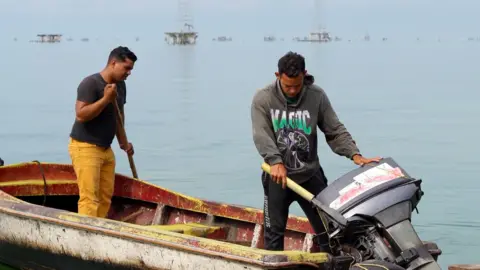
Discussions of investment and reform are met with a mixture of hope and skepticism as the fishing industry and local communities await change while still grappling with a turbulent history in the oil sector.