The European Union has added Iran's Islamic Revolutionary Guard Corps (IRGC) to its terrorist list in response to Tehran's deadly crackdown on protesters in recent weeks.
The bloc's top diplomat Kaja Kallas stated that EU foreign ministers took the decisive step because repression cannot go unanswered. This measure elevates the IRGC, a significant military, economic, and political force in Iran, to the same level as jihadist groups such as al-Qaeda and the Islamic State group.
Human rights organizations estimate that thousands of protesters have been killed by security forces, including the IRGC, during the unrest in December and January. Kallas emphasized that any regime that kills its own people is courting its own demise, while suggesting that diplomatic channels with Iran will remain open despite this designation.
In addition to listing the IRGC, the EU plans to impose sanctions on six entities and 15 individuals in Iran, including its Interior Minister Eskandar Momeni and Prosecutor General Mohammad Movahedi Azad, who are alleged to have participated in the violent repression of protests.
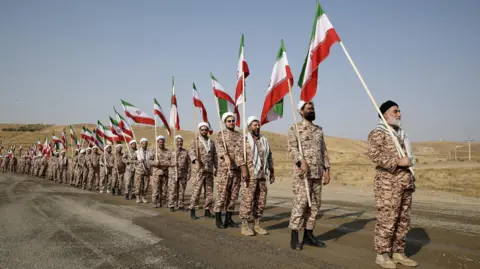
The IRGC, which was founded shortly after the 1979 revolution, has an estimated 190,000 personnel and oversees a wide range of military operations, including Iran's strategic weapons programs.
This landmark decision follows similar designations by Australia, Canada, and the US, though the IRGC has not yet been listed as a terrorist entity by the UK.
As the IRGC faces international condemnation, protests in Iran continue, with human rights groups struggling to verify casualty figures due to an internet blackout imposed by the authorities.