The United States has pledged $2 billion (£1.5bn) to fund United Nations (UN) humanitarian programmes, but has warned the UN it must adapt or die.
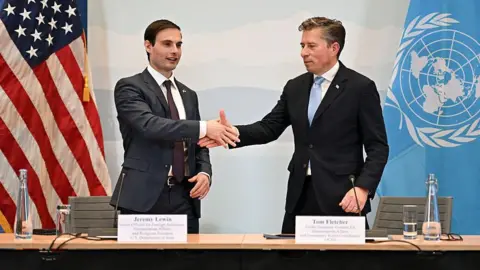
The announcement was made in Geneva by Jeremy Lewin, President Trump's Under Secretary for Foreign Assistance, and the UN's emergency relief chief, Tom Fletcher.
This funding arrives amidst significant cuts in US humanitarian contributions, with further reductions anticipated from other major donors, such as the UK and Germany.
Mr. Fletcher welcomed the new funds, stating they would save millions of lives. However, this $2 billion represents only a fraction of the $17 billion (£12.6bn) the US typically allocates for humanitarian assistance, as noted in 2022.
Moreover, the funding comes with specific conditions. While UN donors occasionally earmark funds for designated projects, this new allocation prioritizes just 17 countries, notably excluding Afghanistan and Yemen. Mr. Lewin cited concerns over UN fund diversion to the Taliban in Afghanistan, asserting that President Trump will never tolerate a penny of taxpayers' money going to terrorist groups.
These restrictions pose challenges for aid groups working in non-prioritized nations. The impact of funding shortfalls has already forced the closure of essential services like mother and baby clinics in Afghanistan and reduced food rations for displaced populations in Sudan. Alarmingly, global child mortality, which had been declining, is expected to rise this year due to these crises.
Additionally, the funding conditions prohibit investments in climate change-related interventions, which Mr. Lewin deemed not life saving or beneficial to US interests.
Lewin, a loyalist to Trump known for his role in dismantling USAID, emphasized the need for the UN to reform its approach, suggesting the US funding will be granted only to organizations that eschew inefficient traditional practices. The UN has expressed its support for focused and effective funding but is now grappling with the politically charged nature of these conditions, which appear to challenge the humanitarian tenets of neutrality and impartiality.
While the UN acknowledges the necessity of the $2 billion, many wonder if the strict requirements compromise the integrity and effectiveness of humanitarian aid.