Trump's Unintended Ripple Effect: Canada's Changing Landscape
 EPA
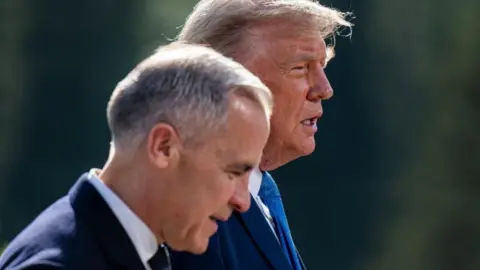
EPAIn the year since US President Donald Trump was inaugurated for his second term, he has brought significant global shifts. Canada, being America's closest neighbor, has notably felt the impact, changing long-standing dynamics with its trade partner and security ally.
Trump's tariffs on crucial Canadian sectors coupled with remarks about Canada being the '51st state' have led to a notable increase in patriotic sentiment among Canadians, alongside rising trepidations over national sovereignty.
This discourse presents an analysis of how Trump's administration has reshaped Canadian perspectives and behavior in five significant ways.
A Shift in Perceptions of the US
Canadians have long maintained positive ties with the US, given family connections and employment within the border states. However, recent polling indicates a downturn in how Canadians view their southern neighbor. Research from Pew revealed that 64% of Canadians held a negative view of the US, marking the highest historical discontent, with many Canadians now perceiving the US as a potential threat.
Fewer Trips South
Despite the proximity, Canadian trips to the US have decreased by over 25%. This decline not only has adverse implications for the US tourism industry, expecting a loss of $5.7 billion, but Canadians are instead opting for domestic vacations.
Buying More Local Products
In response to US tariffs, Canadians have ramped up purchases of local products. This trend saw liquor sales from the US plummet, while Canadian consumers turned to homegrown options.
An Upset in Federal Elections
The political landscape has also shifted. Mark Carney's ascension to the Liberal leadership and subsequent election reflected a turnaround from previous projections of Conservative dominance, as voters sought stability against the backdrop of Trump's tumultuous policies.
Forming New Alliances
With an unpredictable trade relationship, Canada is looking globally to establish new partnerships, including recent diplomatic strides with China. This pivot emphasizes the necessity for Canada to navigate a complex international landscape while safeguarding its interests.
The evolving narrative in Canada, spurred by Trump's presidency, highlights the enduring impact of leadership decisions across borders and the profound interconnectedness of national relationships and domestic sentiments.