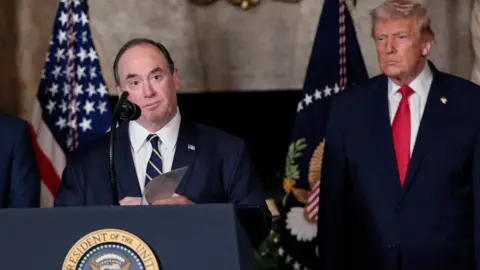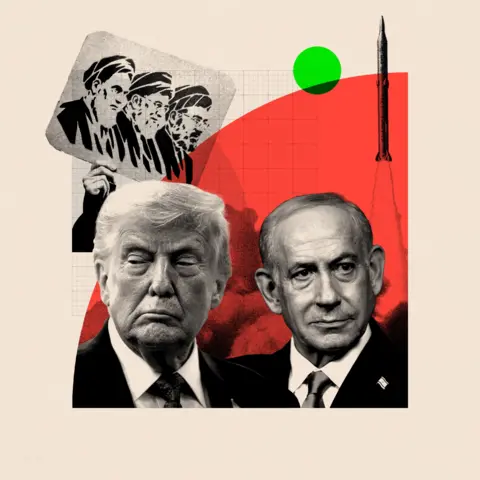
Recent military actions led by President Donald Trump have brought forward age-old truths about warfare as the U.S. finds itself in an escalating conflict with Iran. Trump and Israeli Prime Minister Benjamin Netanyahu initiated airstrikes aimed at Iran, yet the expected quick victory has proven elusive, leading to questions about the lack of strategic planning.
Warfare, it turns out, is not merely about firepower but also requires extensive planning and adaptability. As the renowned Prussian strategist Helmuth von Moltke stated, 'no plan survives first contact with the enemy.' Trump's reliance on gut instinct rather than meticulously constructed strategies appears to hinder not just his administration but also the effectiveness of U.S. military capabilities in the regional theater.
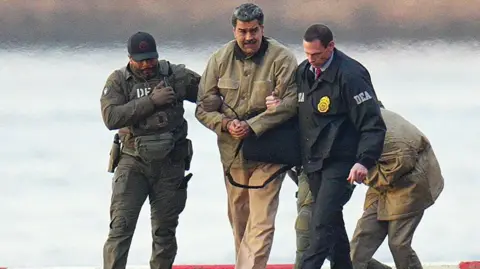
The unexpected resilience of the Iranian regime—a factor Trump reportedly underestimated—along with President Trump's comments suggesting the war might not last long, point towards a disconnection between instinct and the reality of strategic warfare. Moreover, Trump's past reliance on rapid victories, as seen in the approach against Venezuela's Maduro, seems to have failed to account for the complexities tied to Iranian society and governance.
As the conflict deepens and Iranian forces retaliate by targeting U.S. interests in the region, the uncertainty of potential outcomes grows more pronounced. Iran's strategic positioning in the Strait of Hormuz, a vital artery for global oil supply, means any military actions could carry massive repercussions far beyond the immediate battlefield.
In contrast to Trump's less structured approach, Netanyahu's administration has articulated clear military objectives, reflective of a deeply ingrained strategic mindset developed over decades. Both leaders face a pivotal moment as the war continues to unfold, raising profound questions about America's future role in the Middle East and the efficacy of an instinct-driven approach to international relations.
Without a return to diplomacy or a clear exit strategy, the potential for escalation looms. As military forces gather and tensions remain high, the stakes for regional stability and global economic health are unprecedented. The outcome of this conflict could redefine the geopolitical landscape, making it essential for leaders to reassess their strategies and the implications of their warfare.
Warfare, it turns out, is not merely about firepower but also requires extensive planning and adaptability. As the renowned Prussian strategist Helmuth von Moltke stated, 'no plan survives first contact with the enemy.' Trump's reliance on gut instinct rather than meticulously constructed strategies appears to hinder not just his administration but also the effectiveness of U.S. military capabilities in the regional theater.
The unexpected resilience of the Iranian regime—a factor Trump reportedly underestimated—along with President Trump's comments suggesting the war might not last long, point towards a disconnection between instinct and the reality of strategic warfare. Moreover, Trump's past reliance on rapid victories, as seen in the approach against Venezuela's Maduro, seems to have failed to account for the complexities tied to Iranian society and governance.
As the conflict deepens and Iranian forces retaliate by targeting U.S. interests in the region, the uncertainty of potential outcomes grows more pronounced. Iran's strategic positioning in the Strait of Hormuz, a vital artery for global oil supply, means any military actions could carry massive repercussions far beyond the immediate battlefield.
In contrast to Trump's less structured approach, Netanyahu's administration has articulated clear military objectives, reflective of a deeply ingrained strategic mindset developed over decades. Both leaders face a pivotal moment as the war continues to unfold, raising profound questions about America's future role in the Middle East and the efficacy of an instinct-driven approach to international relations.
Without a return to diplomacy or a clear exit strategy, the potential for escalation looms. As military forces gather and tensions remain high, the stakes for regional stability and global economic health are unprecedented. The outcome of this conflict could redefine the geopolitical landscape, making it essential for leaders to reassess their strategies and the implications of their warfare.