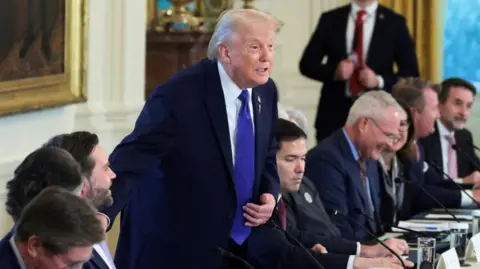
US President Donald Trump met with oil executives in Washington on Friday, as he pushed for major investments in Venezuela.
But no major financial commitments were immediately forthcoming from the meeting, with the head of ExxonMobil warning the South American country was currently 'un-investable'.
Trump has said he expects big oil companies to direct 'at least' $100 billion (£75 billion) toward the country, but industry analysts have warned many companies will be reluctant to go into a situation that still carries significant risk.
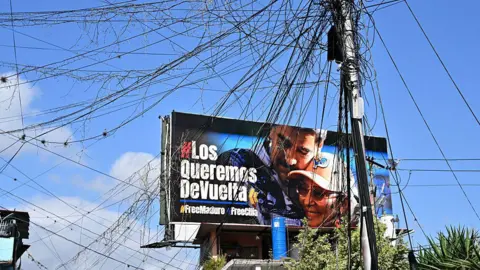
Last week the US seized Venezuelan leader Nicolás Maduro, who is now being held in jail in New York.
Maduro's second-in-command, vice president Delcy Rodríguez, who is seen as more of a pragmatist, is now interim president.
Executives of the biggest US oil majors who attended the meeting acknowledged that the country, which is sitting on vast proven oil reserves, represents a major opportunity. However, they warned they would need to see significant changes inside Venezuela, as well as a welcome from the local government and its people, to make it an attractive place to put money.
'We have had our assets seized there twice and so you can imagine to re-enter a third time would require some pretty significant changes from what we've historically seen and what is currently the state,' Exxon's chief executive Darren Woods said. 'Today it's un-investable.'
Venezuela has had a complicated relationship with international oil firms since oil was discovered in its territory more than 100 years ago. Chevron is the last remaining major American oil firm still operating in the country, while a handful of companies from other countries, including Spain's Repsol and Italy's Eni, both of whom were represented at the White House meeting.
Exxon and ConocoPhillips, which was also in attendance, have been fighting to recoup billions in dollars they say they are owed after the 2007 nationalisation of their assets.
Trump has alluded to the issue repeatedly this week to justify his intervention, including on Friday, but he downplayed the chances of recovery in the meeting, echoing comments by other administration officials in recent years who said the repayment of those debts was not an immediate priority.
'We're not going to go back,' Trump said. He said his administration would work to strike a 'deal' with companies to bring his vision for reviving the industry to reality.
Venezuela sits on top of some of the world's largest reserves, but its production has dropped off sharply in recent decades due to disinvestment and mismanagement - not to mention US sanctions, which have limited its access to the global market. At roughly 1 million barrels per day, the country's production now accounts for less than 1% of global supply.
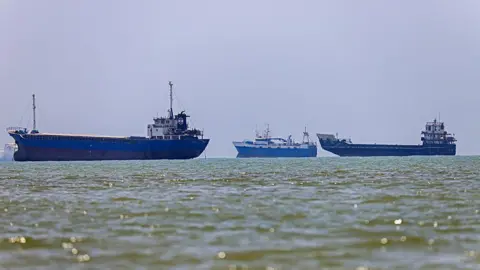
The White House has said it is working to 'selectively' roll back those restrictions, but Trump officials have also made clear they intend to exert control over sales of Venezuelan oil, as a way to maintain leverage over the Venezuelan government. The US this week has seized several oil tankers carrying sanctioned crude.
Executives at oil companies are cautiously optimistic, with Chevron and Repsol expressing intentions to increase their output pending favorable conditions. However, experts caution that major investments will take time and require significant groundwork to make Venezuela an attractive investment destination again.