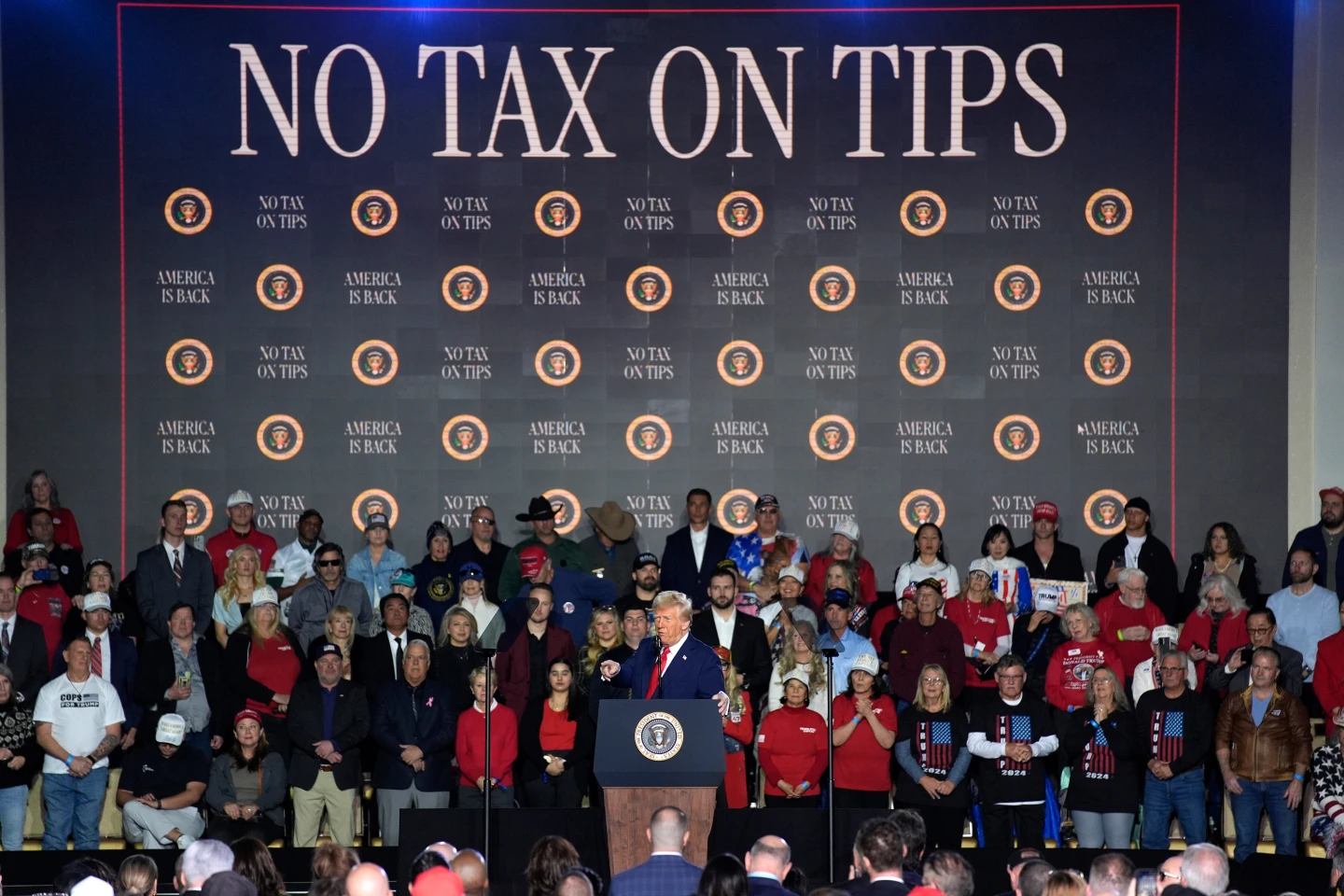
As the tax-filing deadline nears, millions of Americans are expected to claim new federal income tax breaks for tips and overtime wages available for the first time under a wide-ranging tax law enacted by President Donald Trump.
However, many individuals may not experience the same deductions at the state level since each state has discretion over whether to align with federal tax modifications. Many states have opted not to conform.
For workers in states that don’t align with federal tax changes, taxes on earnings from tips or overtime will still apply, despite federal deductions being available. The federal tax-filing deadline is approaching this Wednesday, leaving many unsure about their overall tax strategy.
Varied State Tax Regulations
Currently, 41 states tax wages and salaries, requiring individuals to navigate two separate tax forms: the federal form, followed by the state form. This dual process creates a complex web of calculations since most states leverage the figures from federal returns as a foundation for state tax computations.
Some states are exceptions to this rule; for example, no income tax is imposed in Alaska, Florida, and several others. Washington state applies taxes to capital gains but refrains from taxing standard wages.
Most States Exclude Tips and Overtime
Only a handful of states have decided to mirror Trump’s law, extending tax deductions on tips and overtime wages. Currently, the states of Idaho, Iowa, Montana, North Dakota, and Oregon allow these specific deductions. Meanwhile, Colorado offers deductions for tips and auto loans but not for overtime.
Moreover, there are states that automatically incorporate federal tax changes within their income taxes unless actively opted out of by the local government officials, as seen in Colorado’s decision to reject overtime deductions.
Unusual Tax Situations
Arizona presents a unique situation where state income tax forms contain deductions for tips and overtime based on an executive order from Democratic Gov. Katie Hobbs. The state has yet to pass a corresponding legislative act to formally cement these deductions into law. The situation remains in limbo as the legislature has failed to act on these proposals amid partisan disagreements.
Delayed Deductions in Other States
Certain states like Georgia, Indiana, and Michigan have already enacted changes allowing deductions for tips and overtime wages starting from the 2026 tax year, indicating a longer wait for eligible taxpayers currently filing returns for 2025. Conversely, Oregon could potentially revoke some deductions based on legislation currently under consideration by Governor Tina Kotek.
The disarray between federal and state tax policies creates uncertainty for many taxpayers navigating the complexities of the upcoming filing deadlines.