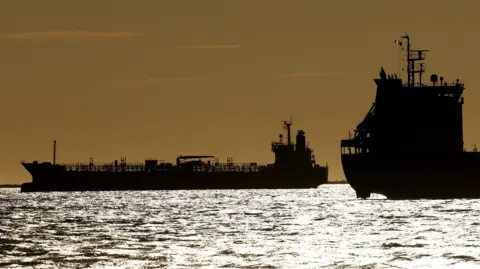
Just under 100 ships have passed through the Strait of Hormuz since the start of March, according to data analysed by BBC Verify, despite periodic attacks on shipping in the area by Iranian forces.
While some energy and everyday goods are still moving through one of the world's busiest shipping lanes, daily traffic is down about 95% since the Iran war began on 28 February.
Before the war, about 138 ships passed through the strait each day, according to the Joint Maritime Information Centre, carrying one-fifth of the global oil supply.
The data provided by shipping analysts Kpler shows 99 vessels passing the narrow strait so far this month, averaging just 5-6 vessels a day.
Our analysis indicates that about a third of these recent crossings were made by ships with connections to Iran, including 14 vessels sailing under Iran's flag and others under sanctions due to suspected links to Tehran's oil trade. Nine other ships were owned by companies with addresses linked to China, while six listed India as their destination.
Some ships successfully crossing the strait appear to be taking a longer route than usual. Tracking data for a Pakistan-flagged oil tanker suggests it sailed close to the Iranian coast on its passage through the strait on 15 March, rather than the more widely used route through the middle.
Since the conflict began, we have verified 20 commercial vessels attacked off the Iranian coast, not all of them in the direct vicinity of the Hormuz Strait. On 11 March, the Thai-flagged bulk carrier Mayuree Naree was struck by two projectiles while attempting to pass through.
Three of the 23 crew members remain missing, believed to have been trapped in the engine room when the ship was hit. The mix of threats—drones, missiles, fast attack boats, and potentially mines—presents a serious challenge to maritime navigation.
In an attempt to evade detection, many ships appear to be deliberately switching off their tracking system, known as AIS (Automatic Identification System). By turning off their trackers as they enter the Gulf of Oman, boats are disappearing from maps and reappearing hours or days later in different locations.
This situation raises serious questions about the future of maritime trade through this critical chokepoint. As conflicts escalate, ensuring the security of this vital route will remain a significant challenge.