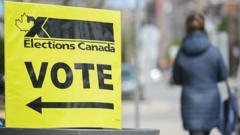
With just days remaining until election day on April 28, Elections Canada reported that 7.3 million ballots have been cast in advance, signifying about a quarter of the eligible voters. This surge in participation is a resounding testament to the energized political landscape, particularly amid critical issues such as trade tensions with the United States and calls for a change in governance after nearly a decade under Liberal leadership.
The early polling took place during the Easter long weekend, with stations operating for four days. The turnout was particularly striking last Friday when approximately 2 million votes were registry. Additionally, mail-in voting has seen a rise, exceeding 754,000 ballots returned, compared to 660,000 in the last election cycle.
Amid these dynamics, current polling shows the Liberals with a narrow lead over the Conservative Party, with Liberal leader Mark Carney aggressively campaigning throughout Prince Edward Island and Quebec. Carney positions his party as the most capable to face President Trump's trade tariffs, highlighting the significant implications tariffs have on Canada's automotive sector and overall economy.
In contrast, Conservative leader Pierre Poilievre is tapping into voter sentiment for change, emphasizing issues like the rising cost of living, housing, and crime during his campaign rallies. He criticizes the Liberals for overspending and advocates for a more fiscally responsible government by stating, “It's time for the government to start pinching pennies.”
Additionally, polling data indicates that the Bloc Quebecois and the New Democratic Party are lagging behind, adding to the competitive nature of this electoral race. As all parties gear up for the concluding stretch, the election presents a critical juncture for Canada's political future, making the record early turnout all the more significant.
The early polling took place during the Easter long weekend, with stations operating for four days. The turnout was particularly striking last Friday when approximately 2 million votes were registry. Additionally, mail-in voting has seen a rise, exceeding 754,000 ballots returned, compared to 660,000 in the last election cycle.
Amid these dynamics, current polling shows the Liberals with a narrow lead over the Conservative Party, with Liberal leader Mark Carney aggressively campaigning throughout Prince Edward Island and Quebec. Carney positions his party as the most capable to face President Trump's trade tariffs, highlighting the significant implications tariffs have on Canada's automotive sector and overall economy.
In contrast, Conservative leader Pierre Poilievre is tapping into voter sentiment for change, emphasizing issues like the rising cost of living, housing, and crime during his campaign rallies. He criticizes the Liberals for overspending and advocates for a more fiscally responsible government by stating, “It's time for the government to start pinching pennies.”
Additionally, polling data indicates that the Bloc Quebecois and the New Democratic Party are lagging behind, adding to the competitive nature of this electoral race. As all parties gear up for the concluding stretch, the election presents a critical juncture for Canada's political future, making the record early turnout all the more significant.