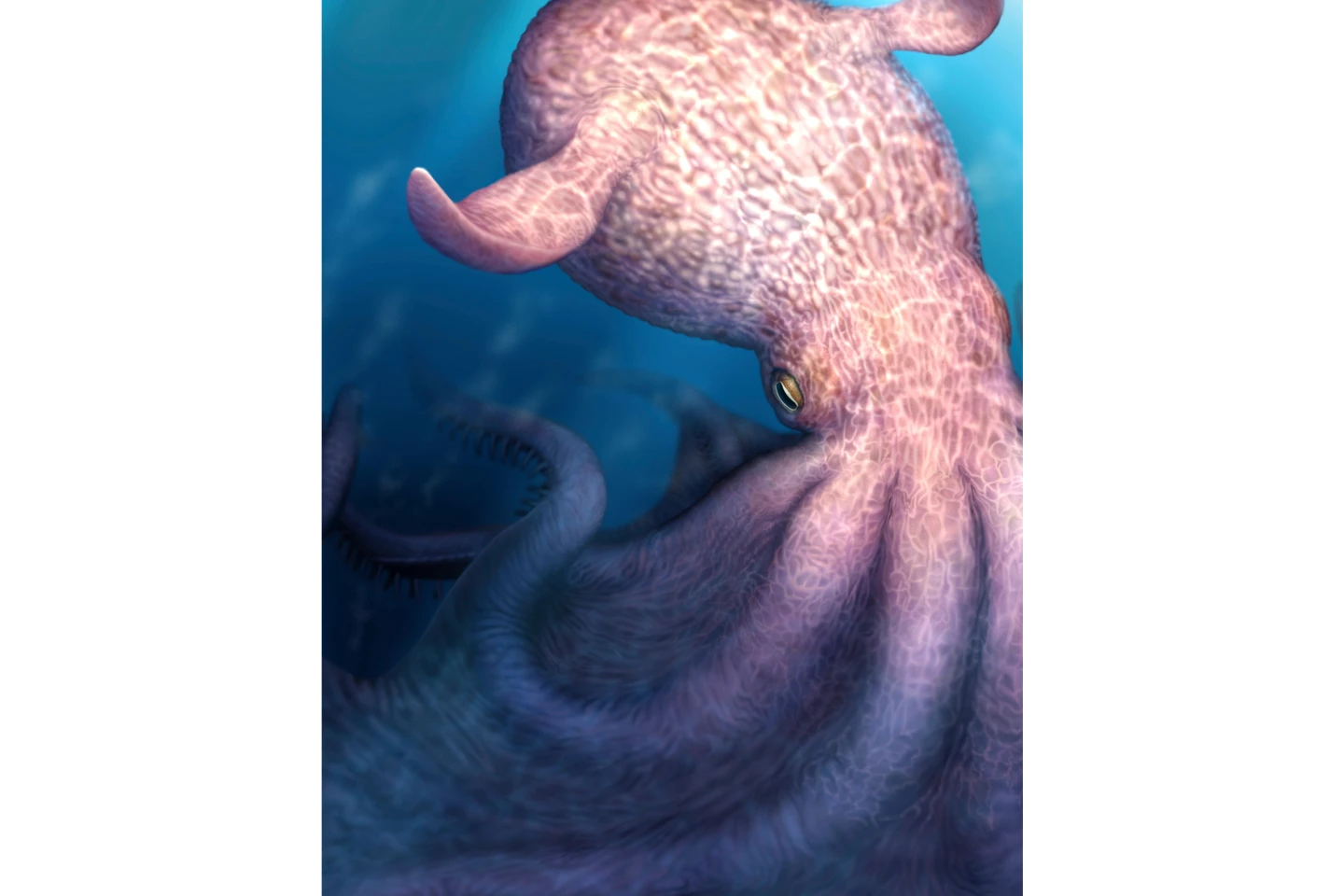
NEW YORK – Giant octopuses, possibly rivaling the size of modern-day krakens, may have been the dominant sea predators during the age of dinosaurs, according to new research based on fossilized jaws.
Recent analysis of ancient octopus jaws from fossils found in Japan and Canada’s Vancouver Island indicates that these marine behemoths could grow between 23 to 62 feet long (7 to 19 meters), positioning them alongside carnivorous marine reptiles for supremacy in the late Cretaceous seas.
Researchers examined the jaws of 15 ancient octopus fossils and discovered another 12 using a technique called digital fossil mining, which generates detailed scans of rock layers to uncover hidden specimens.
Paleontologists note that the jaws show signs of considerable wear and tear, hinting at a diet comprising hard-shelled and bony prey, potentially hinting at their role as significant predators in their ecosystems.
While it's challenging to know exactly what these ancient octopuses were consuming due to the lack of preserved stomach contents, their physical adaptations suggest they were well-equipped for hunting and crushing prey.
As scientists delve deeper into the fossil record, the emerging picture presents octopuses not just as soft-bodied invertebrates, but rather as powerful contenders in the prehistoric food chain.