China's economy grew faster than expected in the first three months of the year, even as countries around the world feel the impact of the US-Israel war with Iran. Gross domestic product (GDP) rose by 5% in the period, compared to a year earlier, according to official data, surpassing economists' expectations of approximately 4.8%.
This growth occurred despite the conflict in the Middle East, which began on February 28, severely disrupting global energy supplies and affecting Asia significantly. This report marks the first release of official GDP figures since Beijing reduced its annual economic growth target to between 4.5% and 5%, the lowest goal since 1991.
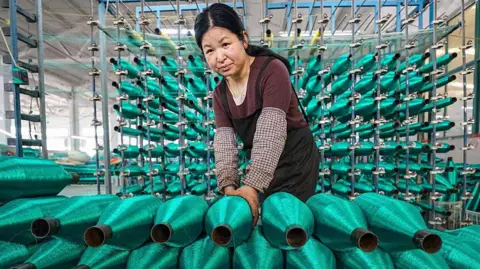
The rebound following the last quarter's weaker growth of 4.5% was primarily driven by manufacturing. However, the world's second-largest economy continues to contend with declining property investment. Analyst Kyle Chan from the Brookings Institution noted that car and other exports emerged as significant contributors to the positive economic data.
Chan expressed concern that the full consequences of the Iran war are yet to be witnessed, suggesting the next quarter's GDP figures may show declines due to trade disruptions stemming from the ongoing conflict.
China's recent GDP targets and aspirations were outlined in March within its latest Five-Year Plan, which emphasizes technological innovation and efforts to stimulate domestic spending. Meanwhile, the ruling Communist Party aims to restructure an economy that grapples with issues like sluggish consumption, an aging population, and a continuous property crisis.
Additionally, China is experiencing challenges from abroad, including an energy crunch exacerbated by the Iran war and existing global trade tensions due to U.S. tariff policies. The U.S. currently imposes a 10% tariff on most Chinese goods, and plans suggest these could revert to previous levels following a Supreme Court ruling against many import taxes.
In international trade, China's export growth tumbled to 2.5% in March amid rising inflation caused by the conflict, indicating a potential slowdown in consumer spending globally. Customs data also revealed almost a 28% increase in imports during this period, resulting in a monthly trade surplus of just over $50 billion, marking the lowest level in more than a year. This surge in import values correlates with increased global costs from the Iran conflict, particularly in oil and materials derived from it.
Although China's dependency on Gulf oil is less compared to other major Asian economies, rising fuel prices are leading to increased costs domestically, affecting consumer behavior and causing airlines to reduce flight services as jet fuel prices rise. The long-term impact of the Iran war on China's exports remains uncertain, as demand from its trading partners hinges on their economic stability.
This growth occurred despite the conflict in the Middle East, which began on February 28, severely disrupting global energy supplies and affecting Asia significantly. This report marks the first release of official GDP figures since Beijing reduced its annual economic growth target to between 4.5% and 5%, the lowest goal since 1991.
The rebound following the last quarter's weaker growth of 4.5% was primarily driven by manufacturing. However, the world's second-largest economy continues to contend with declining property investment. Analyst Kyle Chan from the Brookings Institution noted that car and other exports emerged as significant contributors to the positive economic data.
Chan expressed concern that the full consequences of the Iran war are yet to be witnessed, suggesting the next quarter's GDP figures may show declines due to trade disruptions stemming from the ongoing conflict.
China's recent GDP targets and aspirations were outlined in March within its latest Five-Year Plan, which emphasizes technological innovation and efforts to stimulate domestic spending. Meanwhile, the ruling Communist Party aims to restructure an economy that grapples with issues like sluggish consumption, an aging population, and a continuous property crisis.
Additionally, China is experiencing challenges from abroad, including an energy crunch exacerbated by the Iran war and existing global trade tensions due to U.S. tariff policies. The U.S. currently imposes a 10% tariff on most Chinese goods, and plans suggest these could revert to previous levels following a Supreme Court ruling against many import taxes.
In international trade, China's export growth tumbled to 2.5% in March amid rising inflation caused by the conflict, indicating a potential slowdown in consumer spending globally. Customs data also revealed almost a 28% increase in imports during this period, resulting in a monthly trade surplus of just over $50 billion, marking the lowest level in more than a year. This surge in import values correlates with increased global costs from the Iran conflict, particularly in oil and materials derived from it.
Although China's dependency on Gulf oil is less compared to other major Asian economies, rising fuel prices are leading to increased costs domestically, affecting consumer behavior and causing airlines to reduce flight services as jet fuel prices rise. The long-term impact of the Iran war on China's exports remains uncertain, as demand from its trading partners hinges on their economic stability.