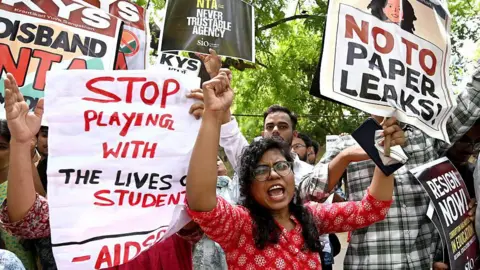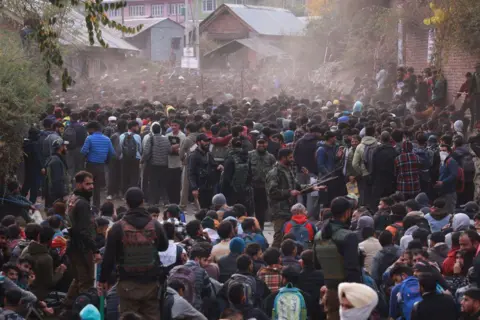
India's youth story is a study in contradictions - of abundance and scarcity, promise and drift. The latest report by Azim Premji University reveals that while India has the largest youth population in the world, approximately 367 million individuals aged between 15 and 29 years, a substantial number are jobless. A staggering 263 million of these youths are outside the education system, leading to a stark reality where India is rich in youth but poor in employment opportunities.
The report outlines significant advancements in education, particularly over the past four decades, with a notable increase in enrollment in high schools and colleges. Gender gaps have narrowed, and caste barriers have become less pronounced. Yet, despite these achievements, the transition from education to employment remains fraught with challenges.
Graduate unemployment rates are alarming, with nearly 40% of graduates aged 15-25 and 20% of those aged 25-29 reporting joblessness. Despite the economic recovery post-pandemic, much of the new employment has been concentrated in agriculture, which often involves low productivity and underemployment.
The changing demographics and aspirations of the youth present a double-edged sword: more educated individuals entering the labor market, but with insufficient pathways available to capitalize on their skills. This employment crisis demands immediate policy attention to ensure that the burgeoning youth population can translate its potential into meaningful economic contribution. As noted by many economists, revitalizing India's growth model to provide productive job opportunities is critical to harnessing the demographic dividend that the nation currently possesses.
The report outlines significant advancements in education, particularly over the past four decades, with a notable increase in enrollment in high schools and colleges. Gender gaps have narrowed, and caste barriers have become less pronounced. Yet, despite these achievements, the transition from education to employment remains fraught with challenges.
Graduate unemployment rates are alarming, with nearly 40% of graduates aged 15-25 and 20% of those aged 25-29 reporting joblessness. Despite the economic recovery post-pandemic, much of the new employment has been concentrated in agriculture, which often involves low productivity and underemployment.
The changing demographics and aspirations of the youth present a double-edged sword: more educated individuals entering the labor market, but with insufficient pathways available to capitalize on their skills. This employment crisis demands immediate policy attention to ensure that the burgeoning youth population can translate its potential into meaningful economic contribution. As noted by many economists, revitalizing India's growth model to provide productive job opportunities is critical to harnessing the demographic dividend that the nation currently possesses.